
TL;DR:
- Offshore jobs in the UK offer higher salaries and require specific safety certifications.
- Entry-level roles like roustabout and catering are accessible with the right safety qualifications.
- Success depends on attitude, networking, and building experience through short-term contracts.
Offshore work in the UK can pay significantly more than comparable onshore roles, with experienced hands earning well above average national wages. Yet for many people looking to break in, the path forward feels genuinely unclear. Which certifications do you need first? Where do you actually find real job openings? What do employers expect from someone with no offshore experience? This guide answers all of those questions in plain terms, walking you through every stage from understanding the industry to sitting your first interview. If you've been circling the idea of an offshore career without knowing where to start, this is the place.
Table of Contents
- Understanding offshore jobs and career pathways
- Essential certifications and qualifications
- Finding and applying for offshore jobs
- Preparing for interviews and assessments
- Our perspective: what most guides miss about your first offshore job
- Make your offshore career transition easier
- Frequently asked questions
Key Takeaways
| Point | Details |
|---|---|
| Prepare certifications | Complete required safety and medical training before applying for UK offshore jobs. |
| Target entry roles | Seek roles like roustabout, deckhand, or catering to start your offshore career. |
| Use trusted job boards | Search and apply through reputable UK offshore job sites and agencies. |
| Stand out in interviews | Prepare for safety-oriented questions and meet all fitness requirements to boost your chances. |
| Network for insights | Connect with current offshore workers to learn inside tips and increase your prospects. |
Understanding offshore jobs and career pathways
Offshore jobs are roles carried out on installations or vessels located away from land. That includes oil and gas platforms in the North Sea, offshore wind farms along the UK coastline, and marine support vessels that service both sectors. The work is physically demanding, the environment is unlike any onshore workplace, and the rewards, both financial and in terms of experience, reflect that.
The main sectors hiring in 2026 are:
- Oil and gas: Production platforms, drilling rigs, and pipeline infrastructure, primarily in the North Sea around Aberdeen and the Scottish coast
- Offshore wind: A rapidly expanding sector with installations off the coasts of Yorkshire, Norfolk, and Scotland, requiring technicians, service crew, and support staff
- Marine support: Vessels and crew that transport workers, supplies, and equipment between shore and offshore installations
For someone with no offshore background, entry-level roles are the realistic starting point. These include:
- Roustabout: General labourer on a drilling rig, no prior experience required beyond certifications
- Catering assistant: Food preparation and service for offshore crews, a common first role
- Deckhand: Working on support vessels, assisting with mooring and cargo
- Trainee technician: Supporting qualified engineers and tradespeople on maintenance tasks
Work patterns typically follow a rotation schedule, most commonly two weeks on and two weeks off, though some contracts differ. Accommodation, meals, and transport to and from the installation are usually covered by the employer.
| Sector | Entry role examples | Typical location |
|---|---|---|
| Oil and gas | Roustabout, catering | North Sea, Aberdeen |
| Offshore wind | Service crew, trainee tech | East and North UK coasts |
| Marine support | Deckhand, able seaman | UK coastal ports |
The UK offshore workforce report confirms that offshore wind and oil & gas are growing sectors for UK workers, making 2026 a genuinely good time to enter. If you want a broader overview of routes into the industry, offshore career guidance can help you map out a realistic path.
Essential certifications and qualifications
Before you can set foot on any offshore installation in the UK, you must hold specific safety certifications. These are non-negotiable. Employers will not consider your application without them, and no amount of enthusiasm or relevant experience bypasses this requirement.
The most important is the BOSIET certification, the Basic Offshore Safety Induction and Emergency Training. BOSIET is mandatory for all personnel travelling offshore in the UK sector. It covers helicopter underwater escape, firefighting, sea survival, and first aid. The course typically runs over four days and costs between £800 and £1,200 depending on the training centre.
Beyond BOSIET, you will also need:
- MIST (Minimum Industry Safety Training): A one-day induction covering safety awareness and offshore working practices
- Offshore medical certificate: Either OGUK (formerly UKOOA) or ENG1, depending on your role and whether you work on a vessel
- CA-EBS (Compressed Air Emergency Breathing System): Often bundled with BOSIET but worth confirming
- GWO BST (Basic Safety Training): Specifically required for offshore wind roles, covering fire awareness, first aid, manual handling, sea survival, and working at height
Here is a comparison of the two main certification routes:
| Certification | Sector | Duration | Approximate cost | Renewal |
|---|---|---|---|---|
| BOSIET | Oil, gas, wind | 4 days | £800 to £1,200 | Every 4 years |
| GWO BST | Wind energy | 5 days | £600 to £900 | Every 2 years |
Courses are available at OPITO-approved centres across the UK, with major hubs in Aberdeen, Great Yarmouth, and Teesside. You can find a full UK offshore training checklist to make sure you are not missing anything before you apply.
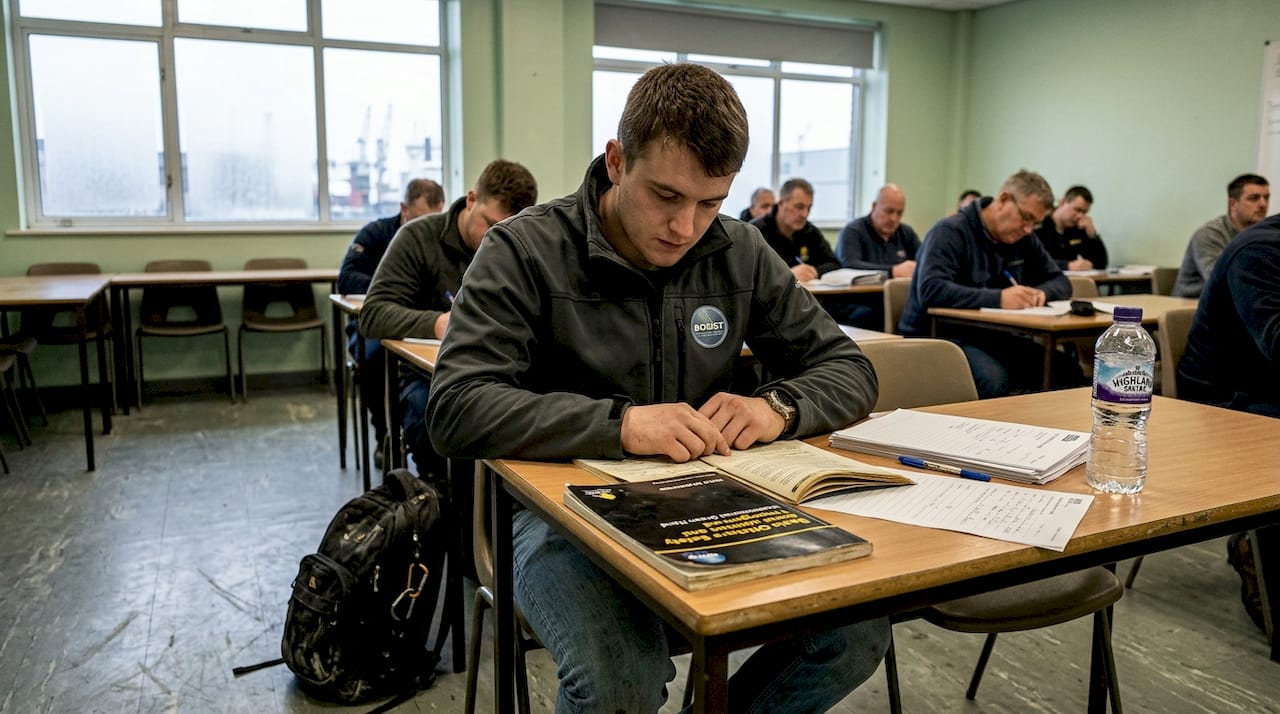
Pro Tip: If you are targeting both oil and gas and wind roles, check whether your chosen training centre offers combined BOSIET and GWO BST packages. Some centres allow you to complete overlapping modules together, cutting both cost and time significantly.
Finding and applying for offshore jobs
Having your certifications in order is the foundation. The next step is finding real opportunities and putting forward an application that actually gets read.
The best places to search for UK offshore vacancies include:
- Energy Jobline: One of the largest specialist platforms, with dedicated offshore filters
- Rigzone: Widely used across oil and gas globally, with strong UK listings
- Orion Group, NES Fircroft, and Petroplan: Established UK-based recruiters who specialise in offshore and energy placements
- Company career pages: Operators like Repsol Sinopec, TotalEnergies, and Serica Energy post directly, as do contractors like Petrofac and Wood
Specialist offshore job boards and UK-based recruiters focus specifically on the energy sector, which means the roles listed are genuine and relevant, not generic construction or engineering posts that happen to mention offshore.
When applying, your CV needs to do specific work. Keep these points in mind:
- Lead with your certifications. Put BOSIET, MIST, and your medical certificate near the top of the page
- Highlight any practical skills: manual handling, confined space awareness, working at height, or relevant trade qualifications
- Keep it to two pages. Offshore recruiters review high volumes and will not read beyond that
- Tailor each application. A roustabout application differs from a catering role, so adjust your language accordingly
- Be honest about your experience level. Trying to appear more experienced than you are will backfire quickly in interviews
For broader offshore job search tips, including how to position yourself as a strong entry-level candidate, there are resources that go much deeper than a standard job board.
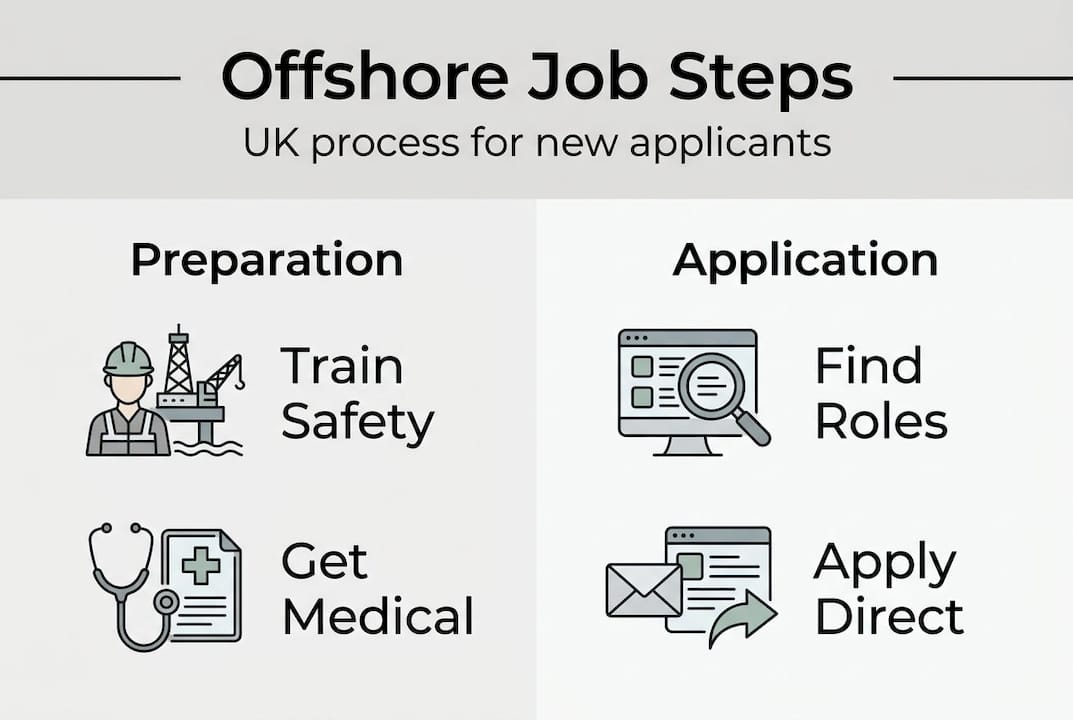
Pro Tip: Call or email recruitment consultants directly rather than just submitting CVs online. A brief, professional message introducing yourself and your certifications puts a name to the application and is often how first contracts get filled.
Preparing for interviews and assessments
Getting an interview for an offshore role is a genuine achievement. The preparation you put in at this stage will determine whether you get the contract.
Offshore interviews tend to focus on three areas:
- Safety awareness: Expect questions about what you would do in specific emergency scenarios, how you approach hazard identification, and your understanding of permit-to-work systems
- Behavioural questions: Interviewers want to know how you handle conflict, pressure, and isolation. Offshore environments are close-quarters and high-stakes
- Practical competence: For technical roles, you may be asked to demonstrate knowledge of tools, maintenance processes, or relevant systems
Prepare specific examples from any previous work, even if it was onshore. Demonstrating that you understand safety culture matters far more than having offshore experience at entry level.
The medical side is equally important. Medical and fitness assessments are required before working offshore in the UK. The OGUK medical covers cardiovascular health, vision, hearing, and general fitness. ENG1 is required for seafarers and covers similar ground. Both must be carried out by an approved doctor.
Never falsify or withhold health information during your offshore medical. Beyond the ethical issue, it creates serious legal liability and puts both you and your colleagues at risk in an emergency.
Useful tips for passing your medical:
- Book it early, as approved doctors can have waiting lists of several weeks
- Bring a full list of any medications you take
- Be honest about any pre-existing conditions. Many are manageable and will not automatically disqualify you
For detailed offshore interview preparation, including common questions and how to answer them, structured guidance can make a real difference to your confidence going in.
Our perspective: what most guides miss about your first offshore job
Most articles about getting into offshore work focus entirely on the formal checklist: certifications, CVs, medicals. That information is correct and necessary. But it does not tell you what actually separates people who land their first contract from those who keep getting overlooked.
Attitude is genuinely assessed. Offshore crews work in confined spaces under pressure, and hiring managers know that a difficult personality creates problems no certification can fix. Showing that you are adaptable, willing to start at the bottom, and genuinely motivated matters enormously.
Networking with people already working offshore is underused and highly effective. Many first contracts come through informal referrals, someone mentioning your name to a supervisor or recruiter. Reading stories from new offshore workers can also give you a realistic picture of what to expect on your first rotation, which helps you walk in prepared rather than shocked.
Finally, most people begin with short-term or backup contracts, covering for absences or filling temporary gaps. Do not dismiss these. They are how you build the track record that leads to longer, better-paid work.
Make your offshore career transition easier
Knowing the steps is one thing. Having someone in your corner who understands the UK offshore sector from the inside is another entirely.
Offshore job guidance at OffstepUK is built specifically for people at the stage you are at right now. Whether you need help choosing the right certifications, structuring your CV for entry-level roles, or understanding what recruiters actually look for, the resources and consultations available are grounded in real offshore industry knowledge. You do not have to piece this together alone. Visit OffstepUK to explore free guidance, structured training pathways, and the option to book a strategy call tailored to your situation.
Frequently asked questions
What qualifications do I need for offshore jobs in the UK?
You will need to obtain BOSIET safety certification and usually a medical certificate such as OGUK or ENG1, both of which are required for all new offshore workers.
Are there entry-level offshore jobs for people without experience?
Yes, entry-level roles such as roustabout or catering assistant can be obtained without prior offshore experience, provided you hold the right certifications. Growing demand across oil, gas, and wind sectors means opportunities for newcomers are genuinely available.
How long does it take to get offshore certified?
Basic safety training and medicals can often be completed within a few weeks, depending on course availability. BOSIET alone takes four days, with medical appointments typically bookable within one to three weeks.
Where can I find current UK offshore job vacancies?
Specialist sites like Energy Jobline and sector-specific recruiters post regular UK offshore job openings for both new and experienced candidates, making them the most reliable starting point for your search.