
TL;DR:
- The UK's offshore energy sector has a high demand for skilled workers with many roles in wind, oil, and gas short of supply.
- Structured apprenticeships and mentorship accelerate entry, skill development, and long-term career success in offshore work.
- Success relies on resilience, adaptability, networking, and thorough preparation for the demanding offshore environment.
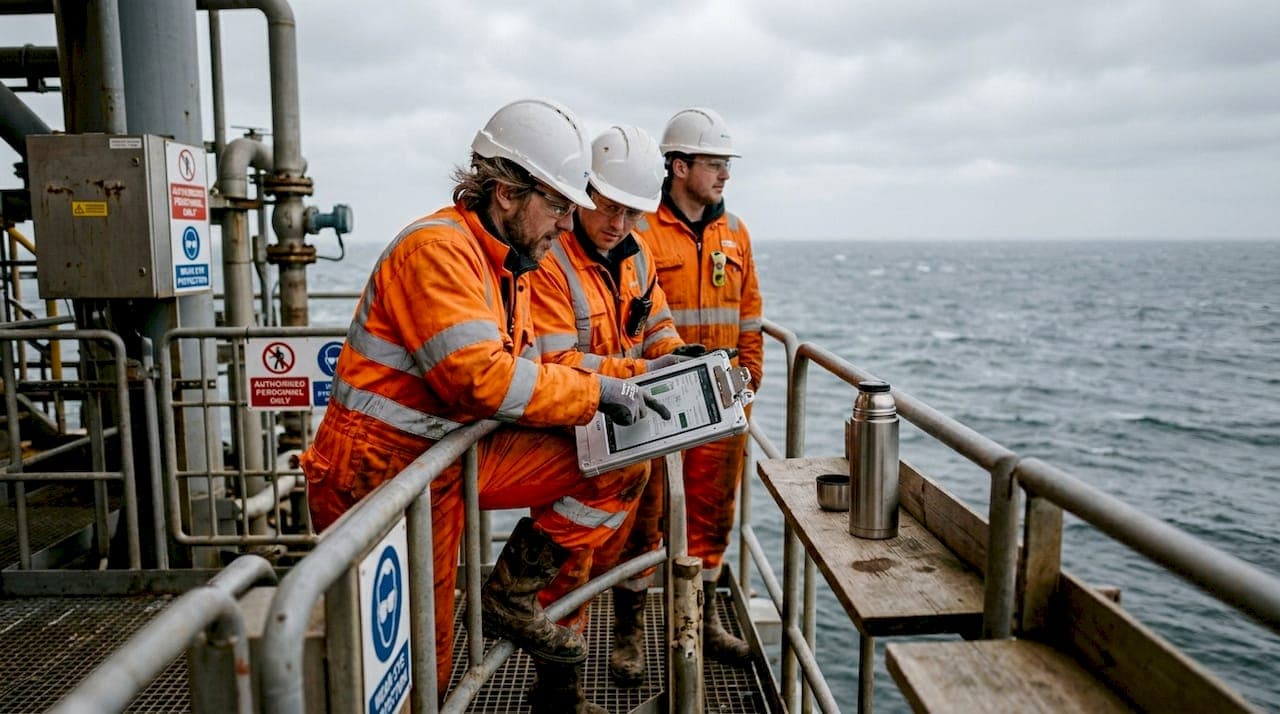
Offshore work has a reputation for being difficult to break into, physically demanding, and reserved for those who already know someone in the industry. That reputation puts a lot of people off before they even start. But here is what most people miss: the UK's offshore energy sector is actively short of skilled workers, and employers are competing to fill roles in wind, oil, and gas. If you invest in the right training now, you are not chasing a closed door. You are walking through one that is already wide open. This article explains exactly why offshore training is worth your time, how apprenticeships and mentorship accelerate your progress, and what practical steps you can take today.
Table of Contents
- The UK's offshore energy sector: demand, opportunities, and challenges
- Apprenticeships and mentorship: fast-tracking offshore careers
- Balancing rewards and risks: offshore work realities
- How to invest in offshore training: practical steps for UK job seekers
- The honest truth: what most guides miss about offshore training
- Explore offshore career pathways with Offstep UK
- Frequently asked questions
Key Takeaways
| Point | Details |
|---|---|
| Specialised training is key | Targeted offshore apprenticeships and mentorship open doors to lucrative energy sector careers. |
| Balance rewards and risks | Offshore work offers high pay and security but requires resilience and safety focus. |
| Practical steps matter | Choosing the right training provider and leveraging industry support are essential for success. |
| Transferable skills | Skills gained through offshore training apply across energy and engineering industries. |
The UK's offshore energy sector: demand, opportunities, and challenges
The UK remains one of the world's most active offshore energy markets. Between the North Sea's established oil and gas infrastructure and the rapid expansion of offshore wind, demand for skilled workers is not slowing down. Engineers, welders, turbine technicians, and safety managers are all in short supply. For anyone willing to invest in the right training, the timing could not be better.
However, the sector is not without its complications. The UK leads in offshore energy services but faces real supply chain risks, particularly around the dominance of Chinese manufacturers in the wind turbine component market. That dependency creates uncertainty around project timelines and, in turn, hiring cycles. Being aware of this helps you plan your entry strategically rather than reacting to short-term fluctuations.
Top offshore roles currently in demand:
- Offshore wind turbine technician
- Structural and pipeline welder
- Mechanical and electrical engineer
- Offshore installation manager
- Health, safety, and environment (HSE) officer
- Subsea engineer
- Crane operator
These roles span both the oil and gas sector and the growing renewables market, which means your skills can travel with you as the energy mix shifts over time.
| Role | Average annual salary (UK) | Projected growth to 2030 |
|---|---|---|
| Wind turbine technician | £38,000 to £52,000 | High |
| Offshore welder | £45,000 to £65,000 | Moderate to high |
| Mechanical engineer | £50,000 to £70,000 | High |
| HSE officer | £42,000 to £60,000 | High |
| Offshore installation manager | £80,000 to £120,000 | Moderate |
"Europe's offshore wind sector is grappling with a strategic dilemma: the need for rapid expansion is in direct tension with over-reliance on Chinese supply chains, creating both risk and opportunity for domestic skills development."
For anyone exploring offshore apprenticeships, this context matters. Understanding where the market is heading helps you choose training that positions you for long-term security, not just immediate employment.
Apprenticeships and mentorship: fast-tracking offshore careers
Structured training is the most reliable route into offshore work, especially if you are starting without direct industry experience. Apprenticeships offered through bodies like the ECITB (Engineering Construction Industry Training Board) are specifically designed to bridge the gap between classroom learning and real offshore environments.
Apprenticeships in welding and engineering provide transferable skills and fast-track entry into offshore employment. That is not just a selling point. It reflects the reality that employers trust apprenticeship-trained candidates because they arrive with verified, practical competencies rather than theoretical knowledge alone.
Mentorship adds another layer entirely. When a seasoned offshore professional guides you through the unwritten rules of the industry, including how to behave on a rig, how to communicate with supervisors, and how to manage safety protocols under pressure, your confidence grows faster than any course can achieve alone.
Comparison: apprenticeship route vs. traditional self-study route
| Factor | Apprenticeship route | Traditional self-study route |
|---|---|---|
| Time to first offshore role | 12 to 36 months | 2 to 5 years |
| Average starting salary | £38,000 to £50,000 | £28,000 to £38,000 |
| Employer recognition | High | Variable |
| Practical skills gained | Structured and verified | Self-directed and inconsistent |
| Mentorship access | Often included | Rarely included |
Steps to applying for offshore apprenticeships in the UK:
- Research ECITB-accredited programmes and energy gateway schemes in your region.
- Identify which trade or technical discipline matches your existing skills or interests.
- Prepare a targeted CV that highlights any relevant technical, safety, or practical experience.
- Contact training providers directly to discuss eligibility and funding options.
- Apply early, as cohorts fill quickly and employer-sponsored places are limited.
- Attend any open days or taster sessions to demonstrate commitment and enthusiasm.
Pro Tip: Align your chosen training with the specific roles your target employers are actively recruiting for. Check job boards before enrolling so your offshore skills pathways match real market demand rather than general industry trends.
Balancing rewards and risks: offshore work realities
Once you grasp the fast-track through training, it is vital to understand what offshore work actually feels like day to day. The financial rewards are real and significant. But so are the challenges, and underestimating them is one of the most common mistakes new entrants make.
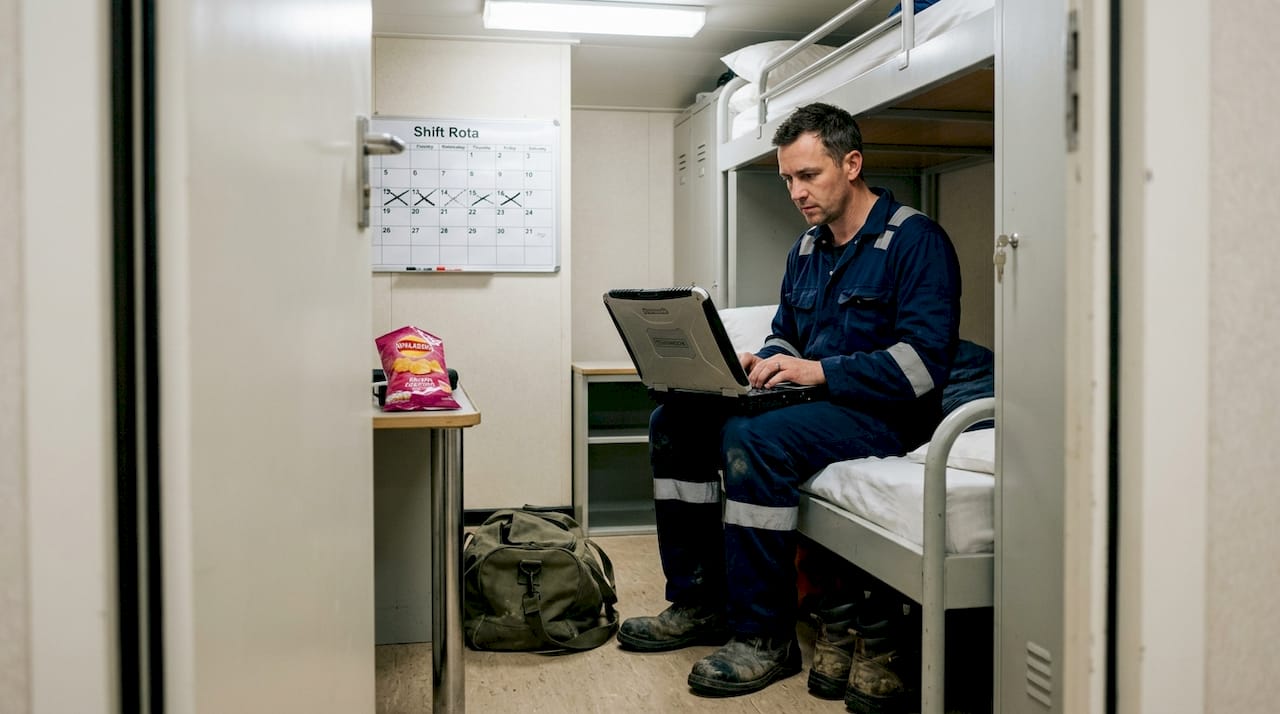
Offshore salaries consistently outperform onshore equivalents. A mid-level offshore engineer typically earns between £50,000 and £70,000 per year, compared to the UK average salary of approximately £35,000. Senior roles and specialist positions can push well beyond £80,000. That premium exists because the work is demanding, rotational, and often conducted in harsh weather conditions far from home.
Key risks and how to mitigate them:
- Rotational shifts: Typical rotations are 2 weeks on, 2 weeks off or 3 weeks on, 3 weeks off. Plan your personal life around this structure before you start.
- Isolation and mental health: Being away from family is genuinely difficult. Build a support network before your first rotation.
- Supply chain disruptions: As offshore energy conditions shift with global pressures, project delays can affect contract continuity. Diversify your skills to remain employable across multiple sectors.
- Safety risks: Offshore environments carry inherent hazards. Certifications like BOSIET (Basic Offshore Safety Induction and Emergency Training) and GWO BST (Global Wind Organisation Basic Safety Training) are non-negotiable.
- Physical demands: The work is physically rigorous. Maintaining fitness before and during employment is not optional.
The offshore career benefits are substantial, but they reward those who prepare thoroughly rather than those who simply show up hoping for the best.
Pro Tip: Before your first offshore role, spend time researching the psychological adjustment that rotational work requires. Speak to people who have done it. Resilience is a skill you can build in advance.
How to invest in offshore training: practical steps for UK job seekers
Understanding the sector's balance of benefits and risks, here is how you can practically invest in offshore training for career advancement.
Steps to choosing and starting offshore training:
- Define your target role clearly. Are you aiming for engineering, safety, welding, or operations? Your answer shapes every training decision.
- Research accredited providers. Look for ECITB, OPITO, or GWO-recognised programmes that employers actively respect.
- Verify industry partnerships. Providers with direct employer links offer better placement prospects and more relevant content.
- Explore funding options. Government apprenticeship levies, employer sponsorship, and regional energy gateway grants can significantly reduce your costs.
- Book your safety certifications early. BOSIET and GWO BST are prerequisites for most offshore roles and can take weeks to schedule.
- Seek mentorship alongside formal training. Structured programmes that combine both consistently produce stronger outcomes.
Factors to evaluate when selecting a training provider:
- Accreditation status (ECITB, OPITO, GWO)
- Employer partnerships and placement track record
- Integration of safety training within the curriculum
- Cost transparency and available funding support
- Access to mentorship or peer learning communities
- Flexibility for those already in employment
Apprenticeship routes are recommended for fast-tracking offshore energy careers, and the evidence consistently supports this. Candidates who complete structured programmes earn more, progress faster, and report higher job satisfaction than those who attempt to self-navigate the industry.
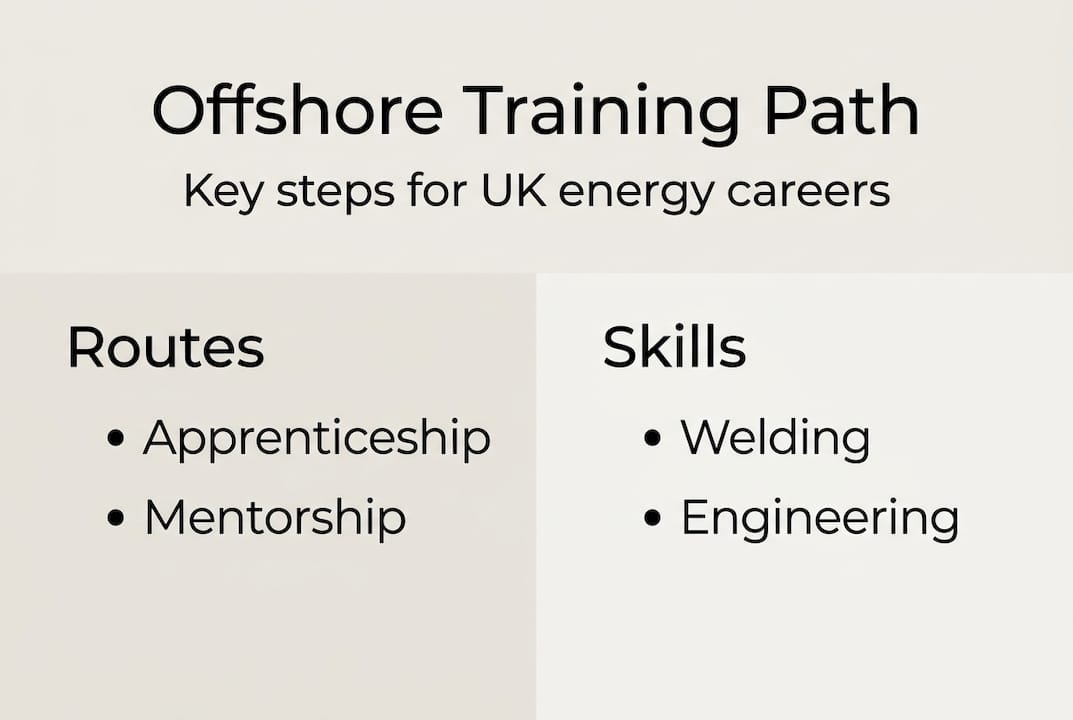
To get the most from mentorship, engage actively. Ask specific questions, shadow your mentor where possible, and apply their feedback immediately. Peer learning within cohorts is equally valuable. The person sitting next to you in training may become a contact who refers you to your next role. Explore offshore training steps to understand what a structured pathway looks like from start to finish.
The honest truth: what most guides miss about offshore training
Most articles about offshore careers focus heavily on salary figures. The numbers are compelling, and they are real. But salary alone does not explain why some trainees thrive and others quietly exit the industry within two years.
What actually separates successful offshore professionals is resilience and adaptability, not just technical competence. Formal training gives you the credentials. Mentorship gives you the context. But neither prepares you fully for the psychological adjustment of working in an isolated, high-stakes environment where mistakes carry serious consequences.
The trainees who succeed fastest are those who embrace discomfort early. They ask for feedback before they feel ready. They network within their cohort and beyond. They treat every placement, every safety briefing, and every difficult conversation with a supervisor as part of their education.
Networking is consistently undervalued in offshore career guides. The industry is smaller than it appears, and your reputation travels quickly. Investing in relationships, not just qualifications, is what sustains a long-term career in this sector.
Explore offshore career pathways with Offstep UK
If you are serious about entering or advancing in the offshore energy sector, having the right guidance from the start makes an enormous difference to how quickly you progress.
Offstep UK's offshore career resources are built specifically for people in your position. Whether you are starting from scratch or looking to move beyond an entry-level role, the platform offers structured mentorship, CV optimisation, certification guidance, and direct support from professionals with real offshore experience. From apprenticeship guidance to strategy calls, every resource is designed to reduce the time between where you are now and where you want to be. Book a free strategy call and take the first concrete step towards a well-paid, secure offshore career.
Frequently asked questions
What qualifications do I need for offshore energy jobs in the UK?
Most entry-level roles require technical training or apprenticeships in engineering, welding, or safety, with ECITB apprenticeships providing a recognised fast-track pathway. Specialist positions require additional certifications such as BOSIET or GWO BST.
How long does offshore training typically take?
Most apprenticeships last one to three years and are structured to transition candidates directly into full-time offshore employment upon completion.
Is offshore work safe and secure compared to onshore jobs?
Offshore roles offer strong job security and significantly higher wages, but demanding conditions and strict safety protocols mean they suit those who prepare thoroughly and commit to ongoing professional development.
Can offshore training skills transfer to other industries?
Yes. Vocational skills in welding, engineering, and safety gained through offshore training are highly transferable to onshore energy, construction, and infrastructure sectors.