
TL;DR:
- Teamwork failures are the root cause of many serious offshore incidents and operational failures.
- Proven methods like Behavioural Coaching and Bridge Resource Management enhance safety and crew cohesion.
- Consistent, everyday practices and developing leadership in teamwork are key to long-term offshore success.
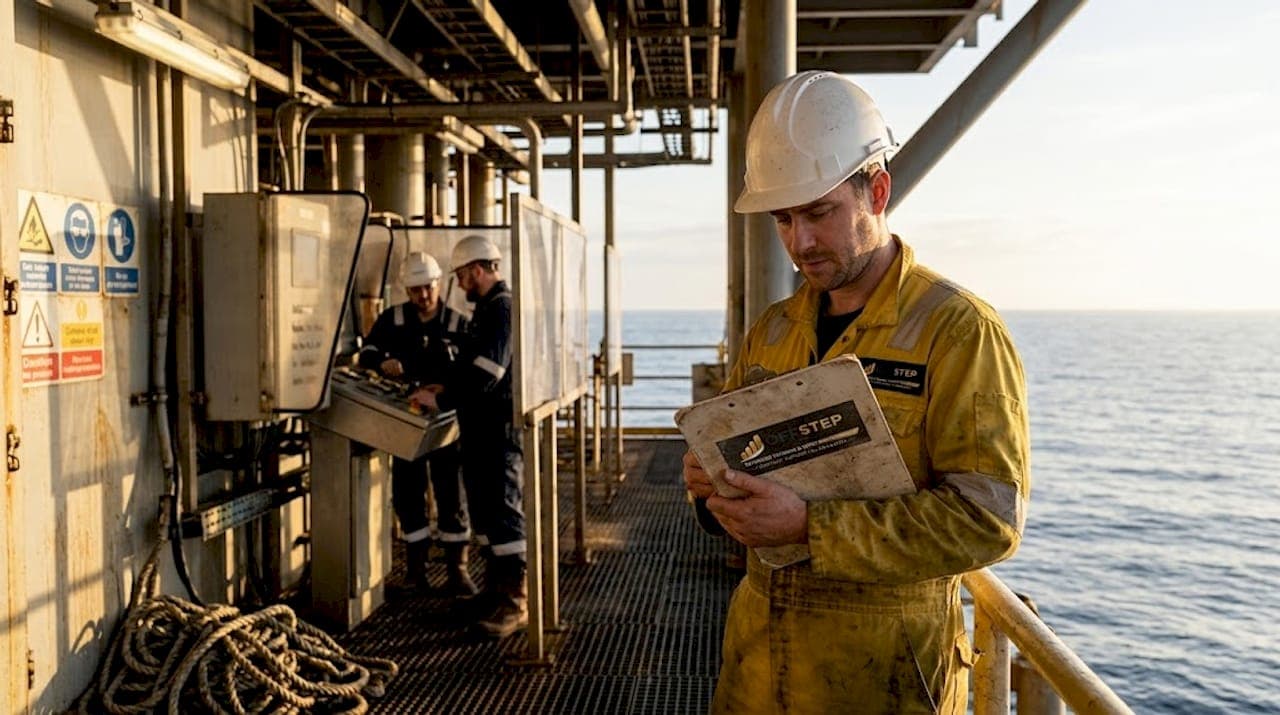
Most offshore professionals assume that accidents happen because of faulty equipment or technical errors. The reality is far more confronting. HSE safety data shows that teamwork failures sit at the root of many serious offshore incidents, from vessel collisions to operational breakdowns. Teamwork is the invisible engine behind every safe shift, every efficient handover, and every career progression on the UK Continental Shelf. Whether you are brand new to the industry or an experienced professional looking to move upwards, understanding how to build, apply, and lead on teamwork is one of the most valuable things you can do for your career.
Table of Contents
- Why teamwork is business-critical in UK offshore environments
- The teamwork toolbox: Proven methods shaping offshore teams
- Making offshore teamwork work: Everyday best practices
- Advancing your offshore career through teamwork leadership
- The uncomfortable truth: Offshore teamwork is no one-off, it is a lifelong practice
- Ready to build your offshore teamwork advantage?
- Frequently asked questions
Key Takeaways
| Point | Details |
|---|---|
| Teamwork drives safety | The most successful and safest offshore teams put teamwork and open communication above technical skill alone. |
| Methodologies matter | Practical approaches like Bridge Resource Management and behavioural coaching yield measurable performance gains. |
| Practice makes leaders | Continually developing teamwork skills accelerates career advancement and recognition in the UK offshore sector. |
| Adaptation is vital | Teams must regularly adapt practices to new members, cultures, and changing project conditions offshore. |
Why teamwork is business-critical in UK offshore environments
Offshore work is not like most jobs. You are operating in a high-consequence environment, often on a rotating schedule, alongside crews from multiple contractors and cultural backgrounds. In that context, teamwork is not a soft skill. It is a hard operational requirement.
In offshore settings, teamwork means coordinated action under pressure, mutual trust built through daily habit, and communication that is clear enough to work even in noisy, stressful conditions. When any of those elements breaks down, the consequences can be severe. Attendant vessel collisions have repeatedly been traced back to poor bridge teamwork and distractions rather than mechanical failure. That is a sobering pattern.
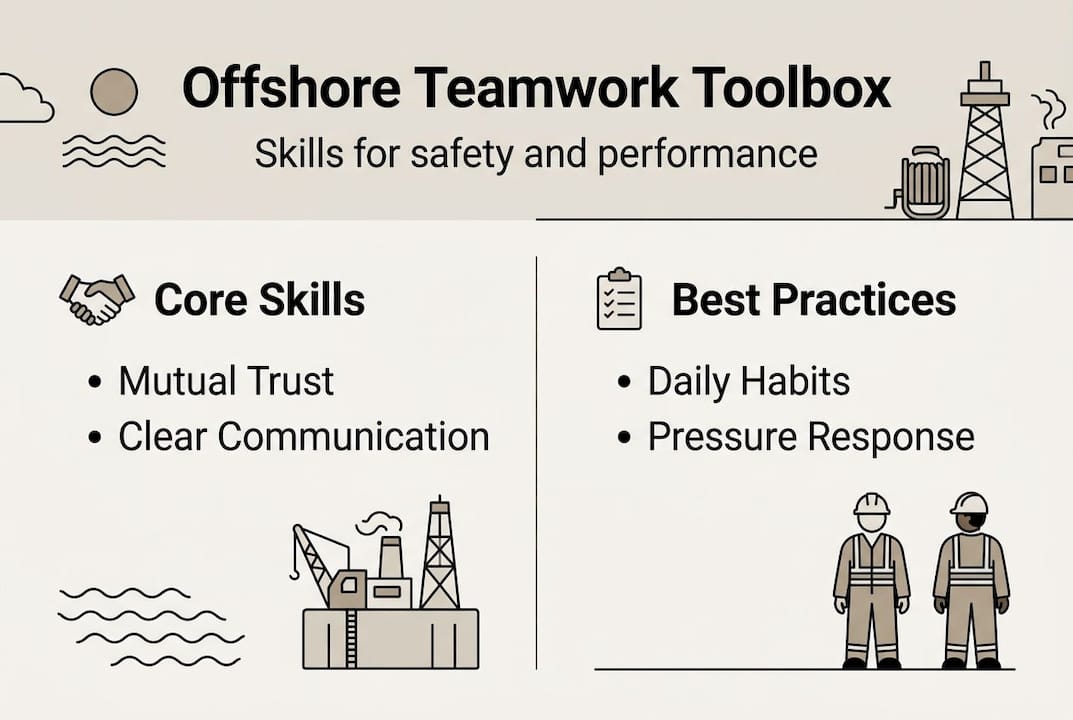
This becomes even more complex in multi-contractor environments. During major decommissioning projects, for instance, you might have teams from several different companies working alongside each other for the first time. Each group has its own habits, reporting lines, and expectations. Without shared behavioural standards and genuine trust, offshore decommissioning operations become exponentially more difficult and more dangerous.
The outcomes of strong teamwork are measurable and meaningful:
- Fewer safety incidents and near-misses
- Higher operational efficiency across shifts
- Stronger crew morale and reduced conflict
- Better knowledge transfer during handovers
- Improved retention of skilled workers
"Teamwork is not just about getting along. In offshore environments, it is the difference between a controlled operation and a crisis." This principle underpins the OEUK Workforce Charter, which connects fair work in offshore careers with the expectation that every team member has an equal voice.
For your career, this matters directly. Employers and contractors across the North Sea are looking for people who can slot into a team quickly, contribute clearly, and support those around them. That ability is what separates candidates who get hired from those who do not.
The teamwork toolbox: Proven methods shaping offshore teams
Knowing that teamwork matters is one thing. Knowing how to develop it is another. The good news is that the offshore industry has tested and refined several specific methods that genuinely improve team cohesion, communication, and safety outcomes.
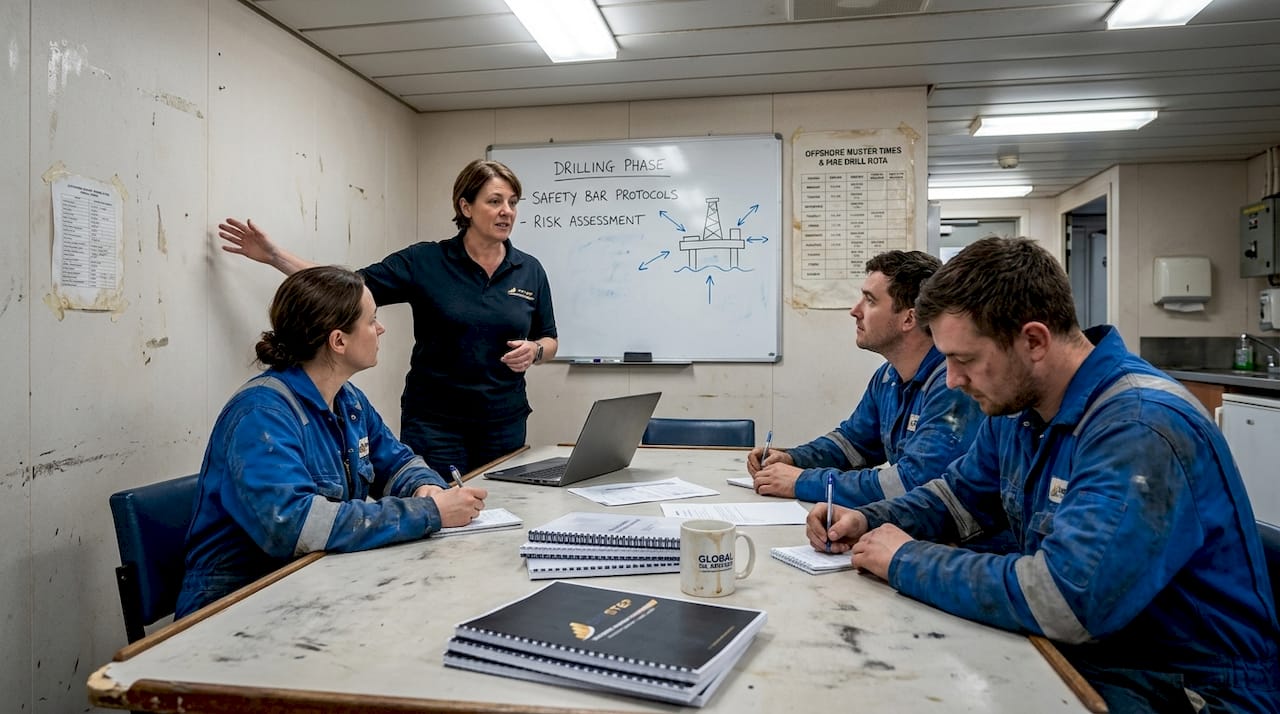
Behavioural coaching approaches used in recent OEUK-supported projects include three core models: the 8 Essentials, Personal Intervention, and Intentional Leadership Coaching. Each one focuses on building honest feedback loops, aligning crews around shared values, and embedding safety-conscious behaviours into everyday interactions rather than treating them as a one-off training exercise.
Bridge Resource Management, known as BRM, is another critical framework. Originally developed for maritime navigation, it has become a cornerstone of offshore vessel safety. BRM increases safety by creating structured habits around communication, error-checking, and situational awareness. It gives everyone on the bridge or platform permission to challenge a decision, raise a concern, or flag a distraction.
| Method | Best used for | Core strength |
|---|---|---|
| Behavioural coaching | Long-term crew development | Builds culture and feedback habits |
| BRM | Vessel and operational safety | Reduces errors in real time |
| Intentional Leadership | Supervisors and team leads | Aligns crew around shared goals |
| Personal Intervention | All crew levels | Empowers individuals to speak up |
Globally, team collaboration research confirms that structured approaches to communication consistently outperform ad-hoc teamwork in high-pressure environments, and offshore is as high-pressure as it gets.
Pro Tip: Do not treat BRM as just a certificate to add to your CV. Treat it as a living practice. Apply its principles during daily safety briefings, toolbox talks, and even informal handovers. The professionals who internalise BRM rather than simply completing it are the ones who stand out.
Initiatives that support mobility and inclusion in the offshore sector increasingly expect workers to arrive with at least a basic working knowledge of these approaches. The more familiar you are with them before you walk onto a platform, the stronger your first impression will be.
Making offshore teamwork work: Everyday best practices
Theory only takes you so far. What actually changes team performance is consistent, deliberate behaviour on every shift. Here is what that looks like in practice.
Multi-contractor decommissioning crews have shown us that shared language and agreed behavioural standards are not optional extras. They are the foundation. When workers from different companies and cultures operate without a common framework, small misunderstandings escalate quickly.
What to do:
- Call out safety concerns immediately, even if you are the most junior person in the room
- Use agreed signals and terminology during high-risk tasks
- Practise daily debriefs to surface issues before they grow
- Actively include quieter team members in discussions
- Review incident reports together as a crew to extract lessons
- Give and receive feedback without defensiveness
What to avoid:
- Allowing distractions during critical operations
- Assuming others have understood without confirming
- Dismissing concerns from less experienced colleagues
- Letting cultural differences go unaddressed
BRM training standards specifically emphasise that no distractions, full team communication, and active situational awareness are required even during standby periods, not just during active operations. That discipline is what separates high-performing crews from average ones.
Pro Tip: Use the OEUK Workforce Charter as a practical reference. It provides clear guidance on fair work, equal voice, and communication standards that apply across all UK offshore roles. Referencing it in a job interview or crew discussion signals that you understand the professional standards the industry is moving towards.
The shift in mindset required here is subtle but important. You are not just showing up to do your technical job. You are contributing to a team system that either protects or endangers everyone on board. That responsibility is shared equally across every crew member, regardless of seniority.
Advancing your offshore career through teamwork leadership
Once you have solid teamwork habits, the next move is turning those habits into visible leadership. This is where teamwork stops being something you do and starts being something you are known for.
Process safety leadership guidance from the HSE makes clear that experienced professionals advance by actively leading team methodologies, not just participating in them. That means facilitating BRM practices, coaching newer crew members in behavioural models, and taking ownership of team culture during your rotation.
Steps to grow as a team leader offshore:
- Complete BRM or behavioural coaching training and apply it visibly on shift
- Volunteer to lead toolbox talks and daily briefings
- Build your skills passport with documented evidence of teamwork contributions
- Seek feedback from supervisors and peers after each rotation
- Identify one team communication weakness per rotation and address it directly
- Mentor a newer team member in safety communication practices
| Skill or behaviour | Why employers value it | Career impact |
|---|---|---|
| BRM certification | Reduces vessel incident risk | Preferred for senior vessel roles |
| Feedback culture | Improves crew retention | Linked to team leader promotion |
| Cross-cultural communication | Supports diverse crews | Essential for multi-contractor sites |
| Incident review leadership | Embeds learning | Recognised in skills passport assessments |
| Inclusive communication | Aligns with OEUK Charter | Supports workforce mobility |
Teamwork and inclusion are now formally embedded in the OEUK Workforce Charter and skills mobility initiatives, meaning that demonstrating these behaviours is directly linked to your ability to move between roles, contractors, and locations across the UK Continental Shelf.
"The rarest quality in any offshore professional is not technical skill. It is the ability to bring a crew together under pressure and keep communication open when it matters most."
Teamwork leadership also improves your job security. Workers known for strong interpersonal and communication skills are consistently the last to be cut during downturns and the first to be called back when operations ramp up again.
The uncomfortable truth: Offshore teamwork is no one-off, it is a lifelong practice
Here is something most career guides will not tell you. Teamwork is never finished. You do not complete a BRM course, tick the box, and move on. The crew around you changes every rotation. Technology evolves. Industry standards shift. What worked brilliantly six months ago may need rethinking today.
The professionals who genuinely excel in UK offshore environments are not necessarily the most assertive or the most technically advanced. They are the ones who remain curious. They listen more than they speak. They notice when a quieter colleague seems uncertain, and they create space for that person to contribute. They approach each new rotation as an opportunity to learn something, not just to repeat what they already know.
Individual assertiveness gets a lot of attention in leadership conversations. Humility gets far less. But in our experience working with offshore professionals across all career stages, humility and genuine listening are the qualities that build lasting trust within a crew. And trust is what keeps people safe.
Become the colleague others want to follow. Not because of your title, but because of how you show up every single day.
Ready to build your offshore teamwork advantage?
The insights in this article are a starting point, but turning them into real career progress takes structured support and the right guidance at each stage.
At Offstep UK, we work specifically with offshore professionals who want to develop the skills, mindset, and credentials that make them stand out. Whether you are just entering the industry or looking to move into a leadership role, our programmes cover everything from certification guidance to teamwork coaching and CV optimisation. If you are serious about using teamwork as a genuine career lever, advance your offshore career with a platform built for exactly that purpose. Share this article with someone in your network who is ready to take the next step.
Frequently asked questions
What is Bridge Resource Management (BRM) and why is it important offshore?
BRM is a structured set of communication and error-checking practices designed for vessel crews near offshore installations. BRM promotes effective teamwork by giving all crew members a shared framework for raising concerns and maintaining situational awareness at all times.
How can offshore workers show strong teamwork skills to employers?
Completing a skills passport, obtaining BRM or behavioural coaching qualifications, and demonstrating leadership in feedback and inclusive communication during rotations are all highly valued. Teamwork and inclusion are now formally linked to skills mobility and career progression under the OEUK Workforce Charter.
What are common teamwork mistakes offshore?
Allowing distractions during critical tasks, failing to speak up about risks, and not confirming shared understanding are the most frequent errors. Distractions and poor communication have been directly linked to vessel collisions and broader operational failures in HSE investigations.
How is teamwork different in decommissioning compared to normal production?
Decommissioning typically involves multiple contractors and rotating crews who may not have worked together before, requiring extra focus on shared standards and open dialogue. Multi-contractor decommissioning crews need agreed language and behavioural frameworks to function safely and effectively throughout the project lifecycle.