
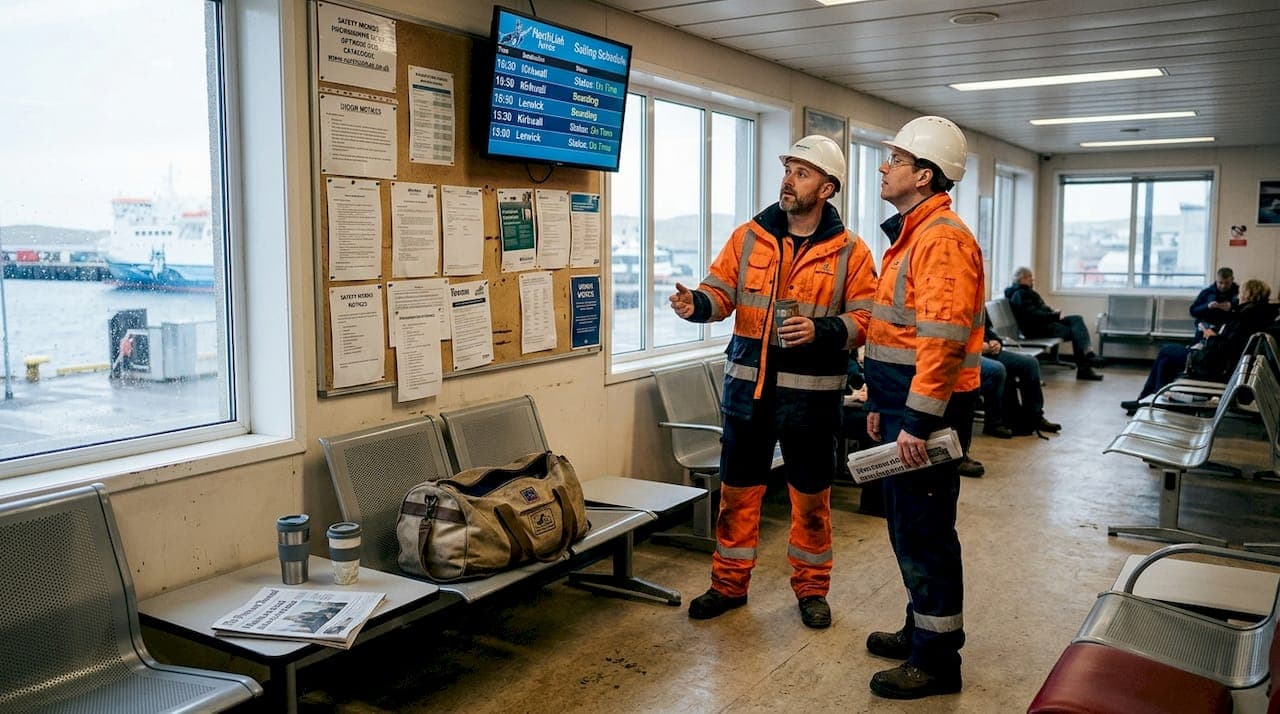
TL;DR:
- Offshore trades include a variety of roles beyond engineering, like electricians and safety officers.
- Certification and sector mobility are key, with high earning potential and career growth prospects.
- Building networks and cross-sector skills enhance job stability and long-term career resilience.
Many people assume offshore work is reserved for those with specialist engineering degrees or years of rig experience. That assumption is costing them a genuinely lucrative career. The UK offshore energy sector supports 154,000 jobs today, with projections pointing to 212,000 by 2030. That growth creates real openings for tradespeople, safety-conscious workers, and career changers willing to put in the groundwork. This guide walks you through what offshore trades actually involve, which certifications matter, what you can realistically earn, and how to build the network that gets you hired.
Table of Contents
- Understanding offshore trades in the UK
- Essential certifications and entry requirements
- Career paths, salaries, and sector mobility
- Navigating challenges and building networks
- A fresh perspective: why cross-sector mobility is your real edge
- Take the next step in your offshore career
- Frequently asked questions
Key Takeaways
| Point | Details |
|---|---|
| High job growth | Offshore trades in the UK are forecast to grow significantly, creating new opportunities every year. |
| Essential certifications | You need OPITO BOSIET, MIST, and medical clearance for oil and gas, or GWO for renewables. |
| Transferable skills | Skills across oil, gas, and renewables sectors are highly compatible, enabling career flexibility. |
| Challenging but rewarding | Offshore life brings tough working conditions but offers high salaries and advancement prospects. |
Understanding offshore trades in the UK
The term "offshore trades" covers a wide range of technical and operational roles performed on platforms, rigs, and vessels located at sea. These are not exclusively engineering positions. Electricians, pipefitters, scaffolders, crane operators, riggers, and mechanical technicians all work offshore, alongside safety officers, logistics coordinators, and catering staff.
The sector divides broadly into two areas. Oil and gas remains the dominant employer, operating fixed and floating production platforms across the North Sea. Offshore wind is growing rapidly, with the UK now home to some of the world's largest offshore wind farms, including Hornsea One and Two. Both sectors need skilled workers, and the demand is accelerating.
"The UK offshore energy workforce is one of the most technically skilled in the world, and the transition to renewables is creating new roles faster than many anticipated."
Here is a snapshot of the current workforce landscape:
| Sector | Current workforce | Projected 2030 workforce |
|---|---|---|
| Oil and gas | ~100,000 | ~110,000 |
| Offshore wind | ~26,000 | ~60,000 |
| Supply chain and support | ~28,000 | ~42,000 |
Key roles you will encounter at entry and mid-level include:
- Roustabout: General deck hand, the most common entry point for newcomers with no offshore experience
- Mechanical technician: Maintains and repairs equipment on platforms
- Wind energy technician: Services turbines, often requiring work at height and GWO certification
- Electrical technician: Handles power systems, instrumentation, and control systems
- Safety officer: Monitors compliance and emergency procedures
Rotation patterns are a defining feature of offshore life. Most roles operate on a 2 weeks on, 2 weeks off schedule with 12-hour shifts. Some contracts use 3 and 3 or 4 and 4 rotations. The time off is genuinely free, which many workers find attractive for family life and personal projects, though the adjustment period can be significant. If you want an honest look at the offshore trade challenges that come with this lifestyle, understanding rotation patterns early saves a lot of surprises later.
Essential certifications and entry requirements
Certifications are the gatekeepers to offshore employment. Without the right paperwork, no recruiter will put you forward regardless of your skills. The good news is that the pathway is clearly defined and achievable within a few months for most candidates.
Here is a comparison of the core requirements across the two main sectors:
| Certification | Sector | Purpose | Validity |
|---|---|---|---|
| OPITO BOSIET | Oil and gas | Basic offshore safety induction | 4 years |
| OPITO MIST | Oil and gas | Minimum industry safety training | 4 years |
| OGUK Medical | Both | Physical fitness assessment | 2 years |
| GWO BST | Offshore wind | Basic safety training for wind | 2 years |
| HUET | Both | Helicopter underwater escape | Included in BOSIET |
Essential certifications for UK offshore roles include OPITO BOSIET, MIST, an OGUK medical, and GWO for those targeting wind. Most certifications are valid for 4 years and require renewal, so budgeting for recertification is part of long-term career planning.
Here is the step-by-step process to become eligible:
- Book and pass your OGUK offshore medical with an approved physician
- Complete OPITO BOSIET (Basic Offshore Emergency Training), which includes HUET
- Complete MIST (Minimum Industry Safety Training) online
- Add GWO Basic Safety Training if you are targeting wind roles
- Obtain any trade-specific qualifications relevant to your background (NVQ, City and Guilds, etc.)
- Register with offshore recruitment agencies and update your CV to reflect offshore-relevant experience
You can verify industry certification standards directly through OEUK to ensure you are meeting current compliance requirements.
Pro Tip: If you come from construction, the military, or the merchant navy, your existing skills carry real weight. Employers value confined space awareness, working at height experience, and mechanical competence. Frame these clearly on your CV and you can fast-track past candidates who lack hands-on site experience.
Career paths, salaries, and sector mobility
One of the most compelling reasons to pursue offshore trades is the earning potential. Salaries significantly outpace equivalent onshore roles, and the tax-free offshore allowances add further value.

| Role | Typical salary band | Notes |
|---|---|---|
| Roustabout (entry) | £28,000 to £38,000 | Starting point, no experience required |
| Mechanical technician | £40,000 to £55,000 | Trade qualification needed |
| Electrical technician | £45,000 to £60,000 | High demand across both sectors |
| Senior engineer | £70,000 to £90,000+ | 5 to 10 years experience |
| Workshop technician | £40,000 to £46,000 base | Plus OTE bonuses |
Average salaries exceed £85,000 for experienced technical roles, with workshop technicians earning £40,000 to £46,000 base plus performance bonuses. These figures reflect why so many tradespeople make the move from onshore to offshore once they understand the earning difference.
Career progression follows a fairly predictable path if you are strategic about it:
- Entry level: Roustabout or assistant technician, focused on learning and certification building
- Mid-level: Technician or specialist, taking on independent task ownership
- Senior level: Lead technician, supervisor, or engineer with team responsibilities
- Management: Operations manager, HSE manager, or project engineer
What makes offshore particularly interesting is the 80 to 90% skills overlap across the oil, gas, and renewables supply chain. This means a mechanical technician who has spent five years on a gas platform can move into offshore wind with relatively minimal retraining. The sector boundaries are far more permeable than most people realise, and smart workers exploit this to stay employed through industry cycles.
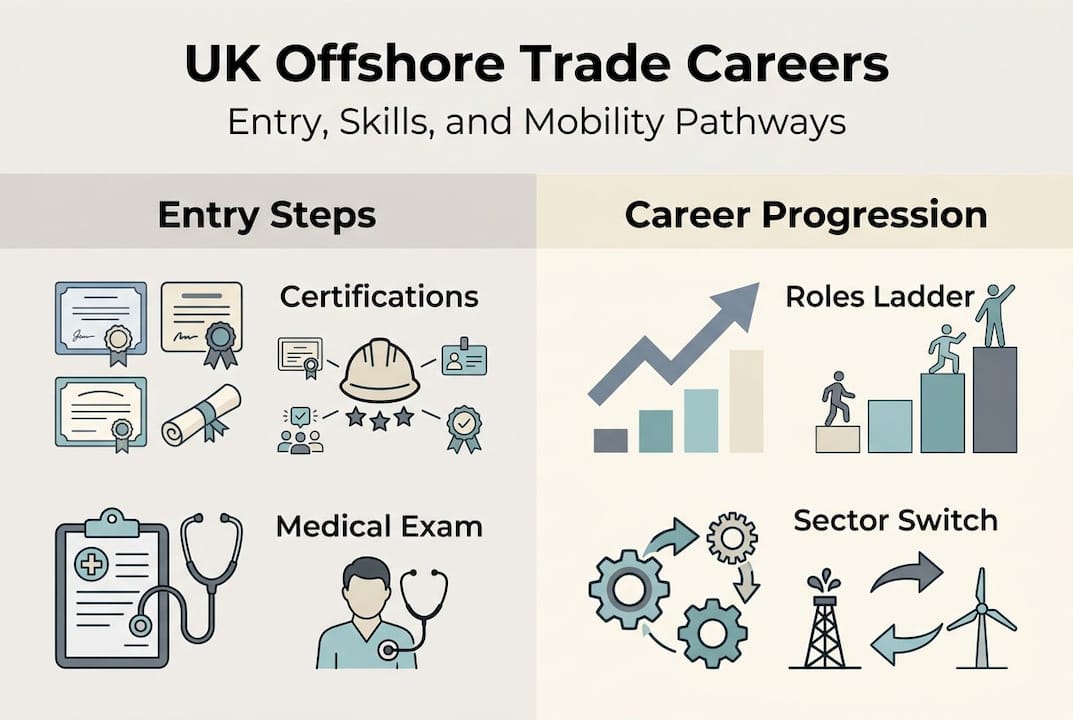
The offshore workforce job growth trajectory also means that upskilling now positions you well ahead of the curve as wind capacity expands through 2030 and beyond.
Navigating challenges and building networks
Offshore work is rewarding, but it is not without its difficulties. Understanding these realities before you start helps you prepare rather than be caught off guard.
The most common challenges workers report include:
- Isolation and mental health: Weeks away from family and friends in a confined environment can take a toll
- Physical demands: Long shifts, manual handling, and working in harsh weather conditions require good baseline fitness
- Safety risks: Working at height, in confined spaces, and near heavy machinery demands constant vigilance
- Relationship strain: The rotation lifestyle affects partners and children, and requires open communication to manage
Physical demands, isolation, and advanced safety training are among the most significant challenges offshore workers face, and mentorship alongside agency support are the most effective resources for managing them.
"The workers who thrive offshore are not necessarily the most technically gifted. They are the ones who manage their mindset, stay connected to their support network, and keep developing their skills."
Building a strong network accelerates everything. Here is how to do it effectively:
- LinkedIn: Join offshore energy groups, follow major operators, and connect with recruiters who specialise in oil, gas, and wind
- Career fairs: Events like Offshore Europe and All-Energy attract major employers and are excellent for face-to-face introductions
- Recruitment agencies: Specialist agencies such as Orion Group, NES Fircroft, and Petroplan place thousands of offshore workers annually
- Apprenticeships: Several operators and contractors now offer structured offshore apprenticeships, particularly in wind
Pro Tip: Register for the Energy Skills Passport, a digital record of your certifications and competencies. Employers and recruiters can view it directly, which removes friction from the hiring process and increases your visibility significantly. Combining this with offshore career support from a specialist consultancy gives you a genuine competitive edge.
A fresh perspective: why cross-sector mobility is your real edge
Here is something the industry does not say loudly enough: the division between oil and gas and offshore wind is largely administrative, not practical. The 80 to 90% skills overlap across sectors means that holding both OPITO and GWO certifications does not just make you versatile. It makes you recession-resistant.
Most workers pick a lane and stay in it. The ones who deliberately acquire certifications across both sectors, and who frame their experience to reflect both environments, are the ones recruiters call first when a contract opens up. They are also the ones who stay employed when oil prices dip or a wind project is delayed.
The conventional advice is to specialise. Our view is different. Specialise in your trade, absolutely. But stay generalist in your sector exposure. Navigating offshore transitions between oil, gas, and wind is not a sign of indecision. It is a sign of strategic thinking. The energy industry rewards adaptability, and the workers who understand this early build careers that last decades rather than cycles.
Take the next step in your offshore career
You now have a clear picture of what the UK offshore trades sector looks like, what it demands, and what it offers in return. The next move is yours.
At Offstep UK, we work directly with individuals at every stage of the offshore journey, whether you are preparing your first certification, stuck in an entry-level role, or ready to push into senior positions. Our structured programmes cover CV optimisation, certification planning, mentorship, and job placement support tailored specifically to the offshore sector. If you are serious about building a career that pays well and lasts, start your offshore journey with us today. Book a free strategy call and we will map out exactly what your next steps look like.
Frequently asked questions
What are the minimum qualifications for offshore trade jobs in the UK?
You need a valid offshore safety certificate such as OPITO BOSIET, MIST, and OGUK medical, plus GWO certification if you are targeting wind energy roles.
Are offshore skills transferable between oil, gas, and renewables?
Yes, with an 80 to 90% skills overlap across sectors, most technical workers can move between oil, gas, and offshore wind with relatively minor additional training.
How demanding are offshore shift patterns?
Rotations are typically 2 weeks on, 2 weeks off with 12-hour shifts, which requires physical stamina and strong mental resilience, particularly in the early months.
Do certifications for offshore work expire?
Yes, most safety certifications such as BOSIET are valid for 4 years and must be renewed through a FOET (Further Offshore Emergency Training) course to remain compliant.
What support exists for finding mentors and jobs offshore?
Apprenticeships, agencies, fairs, and LinkedIn groups are the most effective routes for connecting with mentors, and specialist consultancies can significantly shorten the time it takes to land your first contract.