
TL;DR:
- Long shifts and rotational fatigue impair decision-making and increase hazard risks offshore.
- Falls from height and grating hazards are common, often preventable with proper inspections and controls.
- Process isolation failures can lead to dangerous hydrocarbon releases and major accidents.
The offshore industry offers some of the most competitive salaries available to UK workers, but the daily realities can catch even the most motivated candidates completely off guard. Many aspiring offshore workers focus heavily on certifications and pay rates, yet underestimate the physical demands, technical hazards, and psychological pressures that shape every rotation. Understanding real examples from UK offshore workplaces gives you a genuine advantage before you ever step onto a rig. This article walks through five proven challenge areas, backed by real incidents and regulatory findings, so you can prepare with your eyes fully open.
Table of Contents
- Long shifts and rotational fatigue
- Falls from height and grating hazards
- Process isolation failures and hydrocarbon releases
- Vessel collisions and operational errors
- Occupational health risks and labour disputes
- A seasoned look: why most beginner guides miss the real challenges
- Ready to prepare for the realities of offshore work?
- Frequently asked questions
Key Takeaways
| Point | Details |
|---|---|
| Fatigue is a major risk | Long shifts and rotations create physical and mental challenges, increasing the likelihood of mistakes. |
| Falls from height are still common | Rigorous checks of gratings and access points are essential due to persistent fatality risks. |
| Process isolation must be precise | Even small lapses in maintenance or documentation can result in hydrocarbon releases and major incidents. |
| Health and retention issues persist | Noise, chemical exposure, and modern pay disputes continue to challenge offshore sector wellbeing. |
Long shifts and rotational fatigue
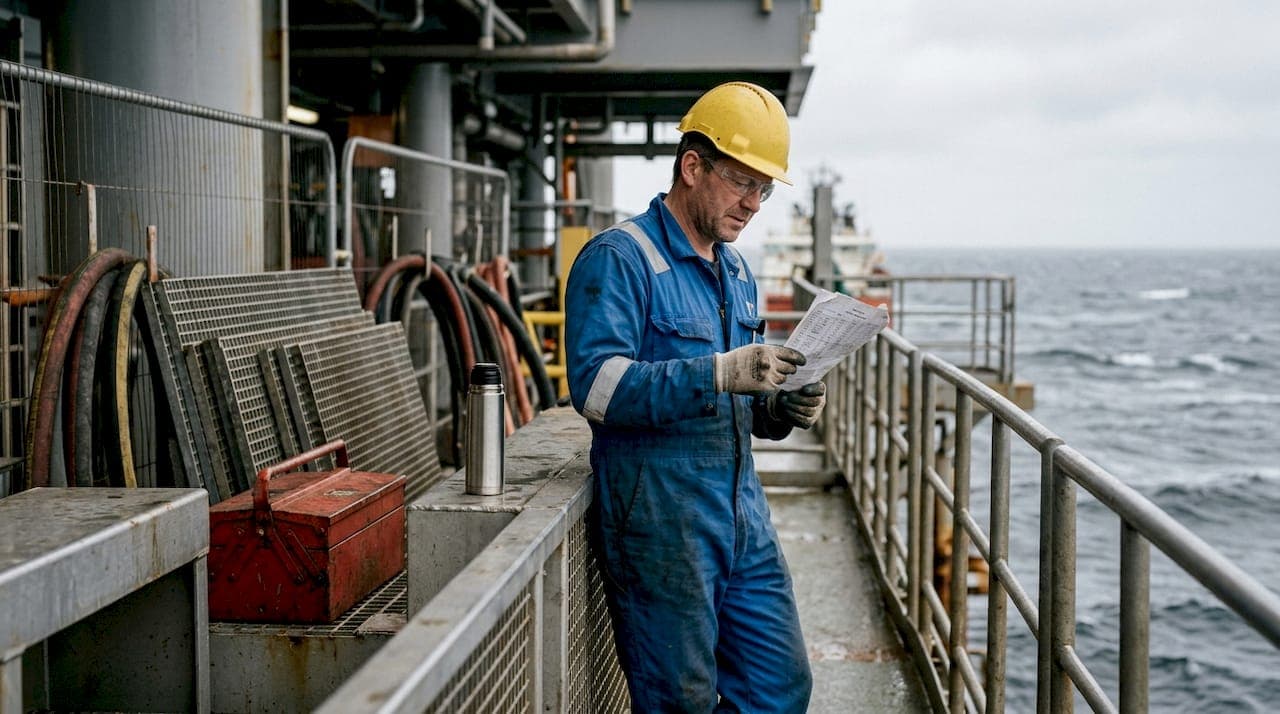
The standard offshore schedule is demanding by design. Most workers operate on a 2-weeks-on/2-weeks-off rotation, completing 12-hour shifts every single day of their hitch. There are no half-days, no quiet Fridays, and no option to call in tired. By day ten or eleven, even experienced hands feel the weight of accumulated fatigue pressing on their concentration.
Fatigue is not simply feeling sleepy. It affects decision-making, reaction times, and the ability to spot hazards during repetitive tasks. A worker checking valve positions for the fourth time that week is far more likely to miss something critical than they were on day one. This is where offshore work challenges become genuinely dangerous rather than merely uncomfortable.
Key symptoms of fatigue on offshore sites include:
- Reduced attention during toolbox talks and safety briefings
- Slower physical responses when working at height or near moving machinery
- Increased irritability, which damages communication between crew members
- Difficulty recalling permit-to-work conditions mid-task
- Micro-sleeps during night shifts, particularly in the early hours
Fatigue-related near-misses are consistently underreported because workers fear being seen as weak or unreliable. The culture is shifting, but slowly. Physical and mental fatigue from long rotations directly increases error risk, particularly during repetitive tasks where the brain switches to autopilot.
Pro Tip: Build a consistent sleep schedule during your first 48 hours offshore, even if you feel alert. Establishing a routine early protects your cognitive performance in the final days of your hitch when fatigue peaks.
Falls from height and grating hazards
After fatigue, the next major threat is physical. Falls from height remain the leading cause of fatalities in the UK offshore sector, and the circumstances are often preventable. A stark example involves a worker who fell 80ft through missing grating in a crane cab on the Valaris 121 rig. The cause was an inadequate risk assessment during a cleaning operation. Nobody had formally checked whether the grating was in place before work began.
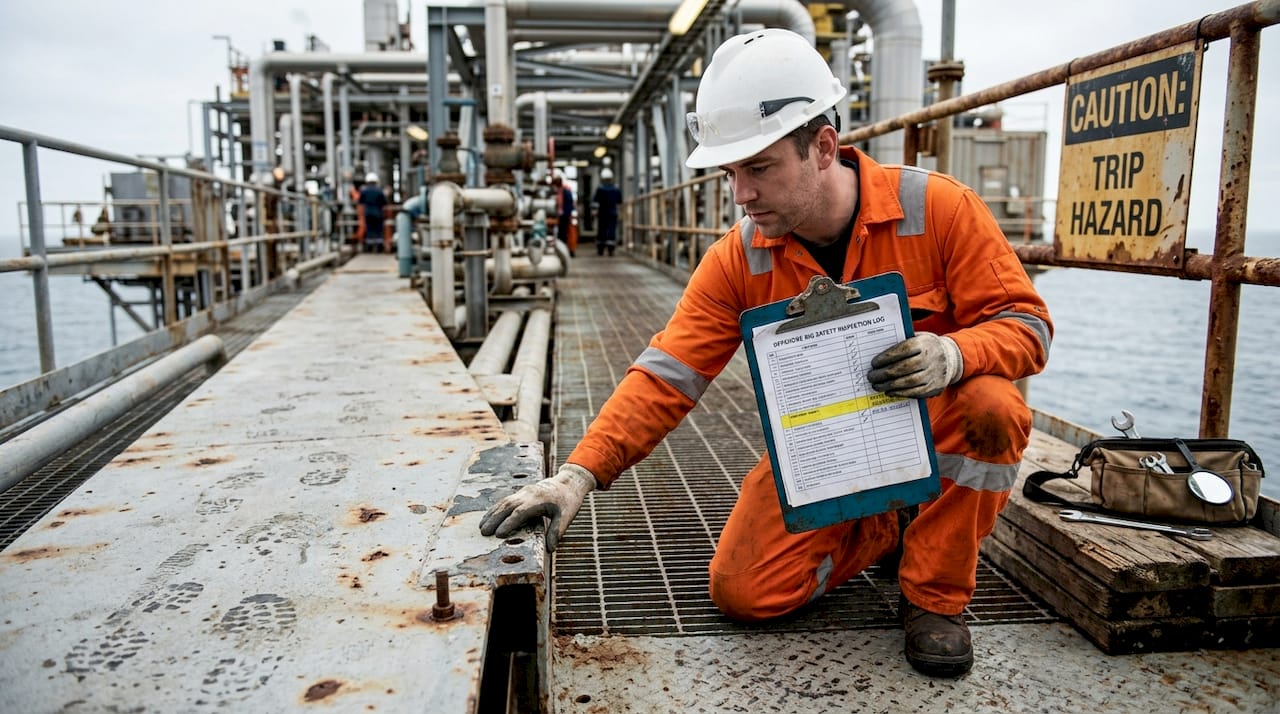
Grating hazards are particularly insidious because they look fine until they are not. Gratings can be displaced during rig moves, corroded over time, or simply left unsecured after maintenance. Grating damage during rig moves creates fall hazards that intensify in adverse weather, requiring formal risk assessments and strict access controls every time.
Common grating and fall hazards include:
- Unsecured or displaced gratings after maintenance or rig moves
- Missing edge protection on elevated walkways
- Wet or icy surfaces combined with inadequate footwear checks
- Poor lighting in lower deck areas during night operations
- Failure to implement exclusion zones beneath overhead work
"Grating systems must be subject to formal inspection regimes and any displacement or damage must trigger an immediate access restriction until the hazard is resolved." — HSE Safety Bulletin on Grating Systems
The HSE recommends that operators implement documented inspection schedules for all grating systems, with particular attention before and after rig moves. Weather conditions must be factored into every working-at-height assessment, not treated as a secondary consideration.
| Incident type | Location | Cause | Outcome |
|---|---|---|---|
| Fall through grating | Valaris 121 crane cab | Missing grating, inadequate risk assessment | Serious injury |
| Grating displacement | Mobile drilling unit | Rig move, no post-move inspection | Near-miss |
| Slip on elevated walkway | Production platform | Adverse weather, no access restriction | Lost-time injury |
Understanding workplace health and safety at this level of detail is what separates candidates who thrive from those who become statistics.
Process isolation failures and hydrocarbon releases
Process isolation is the practice of physically disconnecting equipment from live systems before maintenance begins. It sounds straightforward, but in practice it requires precise knowledge of piping and instrumentation diagrams (P&IDs), careful valve sequencing, and thorough verification. When it goes wrong, the consequences can be catastrophic.
Process isolation failures cause hydrocarbon releases with major accident potential. Common issues include inadequate method statements, inaccurate P&IDs, and poor hazard identification such as trapped fluids that workers did not account for.
Typical causes of process isolation failures offshore:
- Relying on outdated or unapproved P&IDs that do not reflect current pipework
- Using single-block isolation on lines containing hazardous fluids without ALARP justification
- Failing to check for trapped pressure or residual fluids before breaking containment
- Poor communication between the permit issuer and the executing technician
- Rushing isolation steps under operational pressure to minimise downtime
| Isolation procedure | Likely outcome |
|---|---|
| Double-block and bleed with verified P&ID | Controlled, safe maintenance window |
| Single-block isolation on hazardous fluid line | Risk of hydrocarbon release, potential ignition |
| No formal isolation, verbal confirmation only | Near-miss or major incident |
| Isolation without trapped fluid check | Unexpected pressure release on line break |
Pro Tip: Before breaking any containment, physically walk the isolation route yourself. Do not rely solely on the permit paperwork. Confirm every valve position with your own eyes and hands, then sign off with confidence rather than assumption.
Vessel collisions and operational errors
The hazards do not stop at the rig itself. Supply vessels, emergency response and rescue vessels (ERRVs), and platform supply vessels (PSVs) operate in close proximity to installations around the clock. When situational awareness breaks down, the results can be severe.
Real cases recorded by the HSE include a PSV entering the 500m exclusion zone unsafely and an ERRV drifting dangerously close to an installation due to loss of situational awareness, distractions on the bridge, and poor communication between vessel and installation teams. These are not rare anomalies. They represent a pattern.
Common causes of vessel collision incidents include:
- Loss of situational awareness during routine manoeuvres
- Bridge distractions such as administrative tasks during approach
- Communication failures between vessel master and installation control room
- Over-reliance on automated positioning systems in deteriorating weather
- Fatigue among vessel crew on extended watches
"Bridge Resource Management training must be embedded in vessel operations, ensuring all bridge team members actively share situational awareness and challenge decisions that appear unsafe." — HSE Offshore Safety Bulletin
For workers on the installation, a vessel collision is not an abstract risk. It can damage risers, cause structural compromise, and trigger evacuation scenarios. Understanding offshore support strategies and communication protocols matters for everyone on board, not just the bridge crew. This risk also connects directly to fatigue. Tired vessel crews make the same errors as tired rig workers, and the consequences land on everyone.
Occupational health risks and labour disputes
Not every offshore challenge is dramatic. Some accumulate quietly over years. Occupational health risks are a persistent feature of offshore work that many beginner guides gloss over entirely.
Primary health hazards found offshore include:
- Noise-induced hearing loss from prolonged exposure to machinery
- Hand-arm vibration syndrome from power tools used in maintenance roles
- Chemical exposure from drilling fluids, cleaning agents, and coatings
- Asbestos in older installations, particularly pre-1990s platforms
- Food poisoning from inadequate hygiene in catering facilities
Offshore occupational health risks including noise, vibration, chemicals, asbestos in older rigs, and food poisoning from poor hygiene all require systematic risk assessment and active management, not just awareness.
Beyond physical health, the modern offshore sector faces a growing challenge around pay and retention. Workers at SeAH Wind went on strike over below-inflation pay rises and shift allowance disputes at a Hornsea 3 supplier site, highlighting that even the booming renewables sector is not immune to labour unrest. These disputes affect morale, staffing levels, and ultimately safety on site.
Isolation and demanding schedules also take a measurable toll on mental health. Weeks away from family, limited social contact, and the relentless pressure of high-stakes work create conditions where anxiety and low mood can develop gradually. Recognising these risks before you start is the first step to managing them effectively.
A seasoned look: why most beginner guides miss the real challenges
Most resources aimed at aspiring offshore workers focus on the obvious dangers: fire, explosion, rough weather. These are real, but they are not where most workers actually get hurt or burned out. The deeper truth is that repetition is the enemy. Familiar tasks breed complacency, and complacency is where critical mistakes happen.
The HSE has specifically flagged that repetitive tasks increase fatal mistakes, including forgetting safety hooks at height and using single-block isolations on hazardous fluid lines without proper ALARP justification. These are not rookie errors. They happen to experienced workers who have done the same job a hundred times.
The 'new offshore' in wind and renewables pays well and feels progressive, but it carries the same mental trade-offs: family separation, sleep disruption, and the psychological weight of working in an environment where a single lapse can have catastrophic consequences. Safety culture in renewables is still maturing, and workers cannot rely on the institutional memory that older oil and gas platforms have built over decades.
Our honest view is this: genuine safety progress in the UK offshore sector has stalled in some areas, particularly as the renewables workforce scales up rapidly with less experienced personnel. Personal vigilance is not optional. It is your primary defence.
Pro Tip: Never treat a task as safe simply because it is familiar. Challenge your own routine every single time. Ask yourself what has changed since you last did this job, even if the answer feels obvious.
Ready to prepare for the realities of offshore work?
Knowing these challenges is only the first step. Turning that knowledge into genuine readiness takes structured preparation, and that is exactly what we have built at Offstep UK.
At Offstep UK, you will find resources, checklists, and career preparation tools designed specifically for the UK offshore sector. Whether you are exploring your first offshore role or looking to move into a more technical position, our platform gives you real-world guidance rather than generic advice. Join our community to access up-to-date safety insights, real worker stories, and practical frameworks that help you walk onto your first hitch prepared, confident, and aware of what actually awaits you.
Frequently asked questions
What is the most common safety risk for offshore workers?
Falls from height remain the top safety risk offshore, often caused by missing or displaced gratings and inadequate pre-work inspections.
How do shift patterns affect worker health offshore?
12-hour rotations cause accumulated physical and mental fatigue that peaks in the final days of a hitch, significantly raising the risk of errors and health issues.
Are wellness and pay disputes a problem in offshore wind?
Yes. Strike action at SeAH Wind over pay and shift allowances shows that worker wellbeing and retention are live issues even in the growing renewables sector.
What health hazards should offshore workers expect?
Workers face noise, vibration, chemicals, potential asbestos exposure on older platforms, and hygiene-related risks such as food poisoning, all requiring active risk management throughout a career.