

TL;DR:
- Meeting strict medical, safety, and legal requirements is essential to break into UK offshore roles.
- Building a verified skills profile and cross-skilling increase competitiveness in the growing sector.
- Persistence, preparedness, and safety mindset are key to advancing and securing offshore employment.
Breaking into the UK offshore sector is not easy, and employers make no apologies for that. From the moment you submit an application, you are measured against a strict set of criteria covering medical fitness, safety training, legal eligibility, and behavioural standards. Many career switchers underestimate just how much groundwork is required before a single interview. The good news is that with the right preparation, the path is clear and the rewards are substantial. This checklist-style guide walks you through exactly what UK offshore employers expect, so you can focus your energy where it counts most.
Table of Contents
- Understanding baseline employer requirements
- Skills, training and certification expectations
- Behavioural, safety and teamwork standards
- Comparing employer policies, pay and progression
- Our perspective: Navigating offshore entry barriers and opportunities
- Next steps: Connect with UK offshore employers and resources
- Frequently asked questions
Key Takeaways
| Point | Details |
|---|---|
| Certification is essential | Every candidate must secure a medical certificate and safety training before applying. |
| Skills passport speeds hiring | Documented skills can make you more attractive to employers and ease transitions. |
| Rapid advancement is possible | Those who show persistence and adaptability can progress quickly between entry and senior roles. |
| Sector mobility is easy | You can switch between oil, gas and renewables without retesting, thanks to new UK policies. |
Understanding baseline employer requirements
Before anything else, offshore employers will check whether you meet their absolute minimum requirements. These are not preferences. They are gates, and you cannot pass without them.
The first gate is medical fitness. You will need either an OGUK medical certificate, an ENG1, or an STCW medical, depending on the role and vessel type. These assessments confirm that you are physically and mentally capable of working in a demanding, isolated environment. Expect checks on your vision, hearing, cardiovascular health, and mental wellbeing. There is no workaround here.
The second gate is your BOSIET safety certification, which stands for Basic Offshore Safety Induction and Emergency Training. BOSIET covers helicopter underwater escape, firefighting, sea survival, and first aid. Most offshore employers will not consider your application without it. Some roles may also require FOET (Further Offshore Emergency Training) as a refresher once your BOSIET expires.
Here is a quick summary of what employers check at baseline:
- Valid OGUK, ENG1, or STCW medical certificate
- Completed BOSIET or FOET qualification
- Proof of legal right to work in the UK
- Up-to-date personal identification and references
- Clean background check (criminal record and employment history)
On costs: BOSIET training typically runs between £700 and £1,200 in 2026. Most entry-level candidates self-fund this upfront. However, once you are placed, some employers, particularly larger operators, will reimburse mandatory certification costs. Always ask about reimbursement policy before accepting a contract.
"Getting your medical and BOSIET sorted before you start applying signals to employers that you are serious. It removes a major objection before the conversation even begins."
Pro Tip: Book your OGUK medical and BOSIET together at an approved centre to save time and sometimes money on combined packages. Some centres offer discounts when you bundle both.
If you want to understand where these requirements fit into typical career paths in the offshore sector, it helps to map out the full journey from entry to progression before you invest.
Skills, training and certification expectations
Once you have cleared the baseline requirements, employers look at the next layer: your skills, training history, and evidence of ongoing development. This is where you can genuinely differentiate yourself from other candidates.
The OEUK workforce insight for 2025 highlights that the UK offshore sector is projecting growth of 150,000 or more jobs, with a strong emphasis on skills passports, ECITB apprenticeships, and cross-skilling between oil and gas and renewables. That is a significant signal for anyone entering the market now.
Here is how to build a strong skills profile:
- Complete an ECITB (Engineering Construction Industry Training Board) apprenticeship or recognised technical qualification in your trade area.
- Register for a skills passport through OEUK, which documents your qualifications in a portable, employer-verified format.
- Pursue cross-skilling opportunities, particularly if you have a background in a related trade like electrical, mechanical, or civil engineering.
- Add GWO BST (Global Wind Organisation Basic Safety Training) if you are targeting renewables roles.
- Keep records of every course, refresher, and on-the-job training you complete.
A skills passport is particularly valuable. It removes ambiguity for hiring managers and speeds up the vetting process. Think of it as a verified CV for your certifications.
Here is a comparison of key certifications and their relevance:
| Certification | Sector relevance | Typical cost (2026) | Validity period |
|---|---|---|---|
| BOSIET | Oil, gas, renewables | £700 to £1,200 | 4 years |
| GWO BST | Renewables | £400 to £700 | 2 years |
| ECITB apprenticeship | Oil, gas, engineering | Funded/part-funded | Permanent |
| OGUK medical | All offshore | £200 to £400 | 2 years |
Pro Tip: Even if you are targeting oil and gas specifically, completing GWO BST opens doors in the fast-growing renewables sector. Given that empirical standards in offshore employment are converging across sectors, having both qualifications makes you far more competitive.
Cross-skilling is no longer a bonus. It is increasingly expected. Employers want candidates who can adapt as project types shift, particularly as the UK's energy mix continues to evolve.
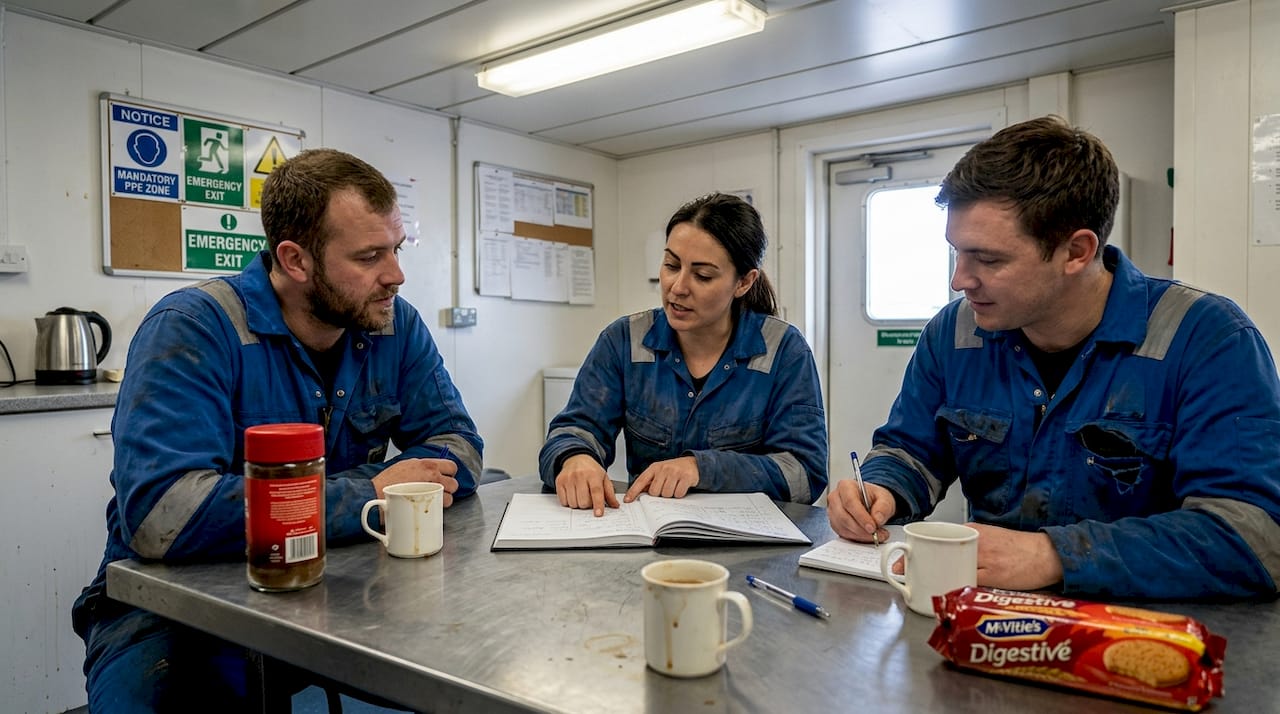
Behavioural, safety and teamwork standards
Qualifications will get you to the interview. How you present yourself, communicate, and demonstrate a safety mindset will determine whether you get the job.
UK offshore employers operate under strict safety cultures. Every person on a platform or vessel is responsible for their own safety and the safety of those around them. Employers are not looking for people who simply follow rules. They want people who understand why the rules exist and who will speak up when something looks wrong.
Key behavioural qualities employers consistently look for:
- A proactive safety mindset, not just compliance
- Clear, calm communication under pressure
- Ability to follow protocols precisely and without shortcuts
- Willingness to take direction from supervisors and team leads
- Adaptability when conditions change quickly
- Respect for colleagues from diverse backgrounds and skill levels
The OEUK Workforce Charter sets out fair pay and working conditions across the sector, and it also signals that employers who sign up to it are committed to professional development and rapid progression for capable workers. Renewables employers are narrowing the pay gap with oil and gas, which means the sector is becoming more competitive for talent overall.
"The candidates who advance fastest offshore are rarely the most qualified on paper. They are the ones who show up ready to learn, follow safety protocols without being reminded, and communicate clearly when something is not right."
Rapid advancement is genuinely possible offshore. Technicians who demonstrate reliability and a strong safety record can move into supervisory or specialist roles within two to three years. Employers reward those who show initiative and consistency, and rapid advancement is one of the most compelling reasons to enter the sector now, particularly in renewables where new roles are being created regularly.
Teamwork is not a soft skill in this context. It is a safety requirement. On a platform, poor communication can have serious consequences. Employers will probe for this in interviews, often through scenario-based questions.
Comparing employer policies, pay and progression
Not all offshore employers are equal, and understanding the differences between sectors and operators will help you make a smarter decision about where to focus your applications.
Oil and gas operators traditionally offer the highest base pay for offshore roles. Entry-level positions can start at £30,000 to £45,000 per year, with experienced technicians earning significantly more. However, the work is often more physically demanding and the rotations can be longer.
Renewables employers are catching up. As the OEUK workforce insight confirms, the renewables sector is maturing rapidly, with pay benchmarks rising and the OEUK Workforce Charter guiding fair conditions across both sectors. The progression routes in renewables can also be faster, given the pace of growth.
Here is a direct comparison:
| Factor | Oil and gas | Renewables |
|---|---|---|
| Entry pay (2026) | £30,000 to £45,000 | £25,000 to £38,000 |
| Progression speed | Moderate | Fast |
| Certification reimbursement | Common | Growing |
| Rotation patterns | 2:2 or 3:3 weeks | Varied, often shorter |
| Sector stability | Established | Expanding |
When comparing employers, consider these factors in order:
- Whether they are signatories to the OEUK Workforce Charter.
- Their policy on certification reimbursement and training support.
- Rotation patterns and how they fit your personal circumstances.
- Progression frameworks and whether they are clearly defined.
- Their track record on safety performance and incident rates.
Pro Tip: When researching employers, look for their OEUK Charter signatory status. It is a reliable indicator of how seriously they take fair pay and career development. You can also explore typical career paths across both sectors to identify where your existing skills translate best.
One important note: switching between oil and gas and renewables does not require you to redo your core certifications. BOSIET and OGUK medicals are recognised across both sectors, which means your investment carries over.
Our perspective: Navigating offshore entry barriers and opportunities
Here is something most guides will not tell you: certifications are a gatekeeping mechanism, not a guarantee. Plenty of people hold a valid BOSIET and OGUK medical and still struggle to land their first role. The difference is almost always preparation, persistence, and positioning.
The UK's net zero commitments are creating real momentum in the offshore sector. Workforce growth projections of 150,000 or more jobs are not abstract. They represent tangible opportunities for people who are ready to move across sectors without needing to requalify from scratch.
What newcomers consistently overlook is that employers are not just hiring skills. They are hiring reliability and adaptability. A candidate who has done the groundwork, understands the empirical standards in offshore employment, and can articulate why they want to work offshore will almost always outperform a more qualified but less prepared applicant.
Persistence is the real differentiator. The entry barriers are real, but they are not insurmountable. Treat the certification process as proof of commitment, not just a box to tick.
Next steps: Connect with UK offshore employers and resources
You now have a clear picture of what UK offshore employers expect. The next step is putting that knowledge into action.
At our UK offshore career platform, we work directly with individuals who are serious about breaking into or advancing within the offshore sector. From certification guidance and CV optimisation to mentorship and employer connections, we provide the structured support that turns preparation into placement. Whether you are just starting out or looking to move from entry-level into a specialist role, we can help you build a credible, competitive profile that gets noticed. Book a free strategy call today and take the first real step towards your offshore career.
Frequently asked questions
What certifications do I need for entry-level offshore work in the UK?
A valid OGUK or ENG1 medical certificate and a BOSIET qualification are required for most offshore entry-level roles in the UK.
Will employers reimburse certification costs?
Some employers offer reimbursement for mandatory certifications, but most candidates fund these upfront before securing a placement.
What is a skills passport and why is it important?
A skills passport documents your qualifications and training in a verified, portable format. OEUK emphasises its use as it helps employers confirm you are job-ready and can speed up the hiring process significantly.
Can I switch sectors (oil and gas to renewables) without retesting?
Yes. Most core certifications including BOSIET and OGUK medicals are recognised across both sectors. Recent OEUK standards mean you can transfer without repeating your core qualifications.