
TL;DR:
- Entry-level rig jobs like roustabout do not require prior offshore experience. Many certifications and physical fitness prepare newcomers for offshore work. Career progression offers high earning potential and advancement through additional certifications.
Many people assume that landing a rig job means years of industry experience, a trade background, or contacts in the right places. That assumption stops thousands of capable people from even applying. The truth is that the UK offshore sector has structured entry paths designed for newcomers, and roles like roustabout exist precisely for those starting from scratch. In this guide, you will learn what a rig job actually involves, which certifications you need, what daily life looks like, and how your career can progress from your very first rotation. Whether you are changing careers or taking your first steps into the industry, this is where to start.
Table of Contents
- What is a rig job? Entry-level roles explained
- Daily life and physical demands offshore
- Certifications and safety requirements: What you need
- Routes into rig jobs and career progression
- What most guides miss about starting a rig career
- Start your offshore journey with the right support
- Frequently asked questions
Key Takeaways
| Point | Details |
|---|---|
| Entry-level accessible | Offshore rig jobs like roustabout or rigger are open to newcomers who hold the right certifications. |
| Training is essential | Mandatory courses such as BOSIET, OGUK medical, and MIST underpin safe rig work and career eligibility. |
| Strong career progression | Rapid advancement is possible, with salaries and responsibility growing significantly as you move up. |
| Physical demands matter | Heavy lifting, long shifts, and team work are everyday realities for rig employees. |
| Flexibility and mindset | A safety-first attitude and willingness to learn outweigh industry experience for those starting offshore. |
What is a rig job? Entry-level roles explained
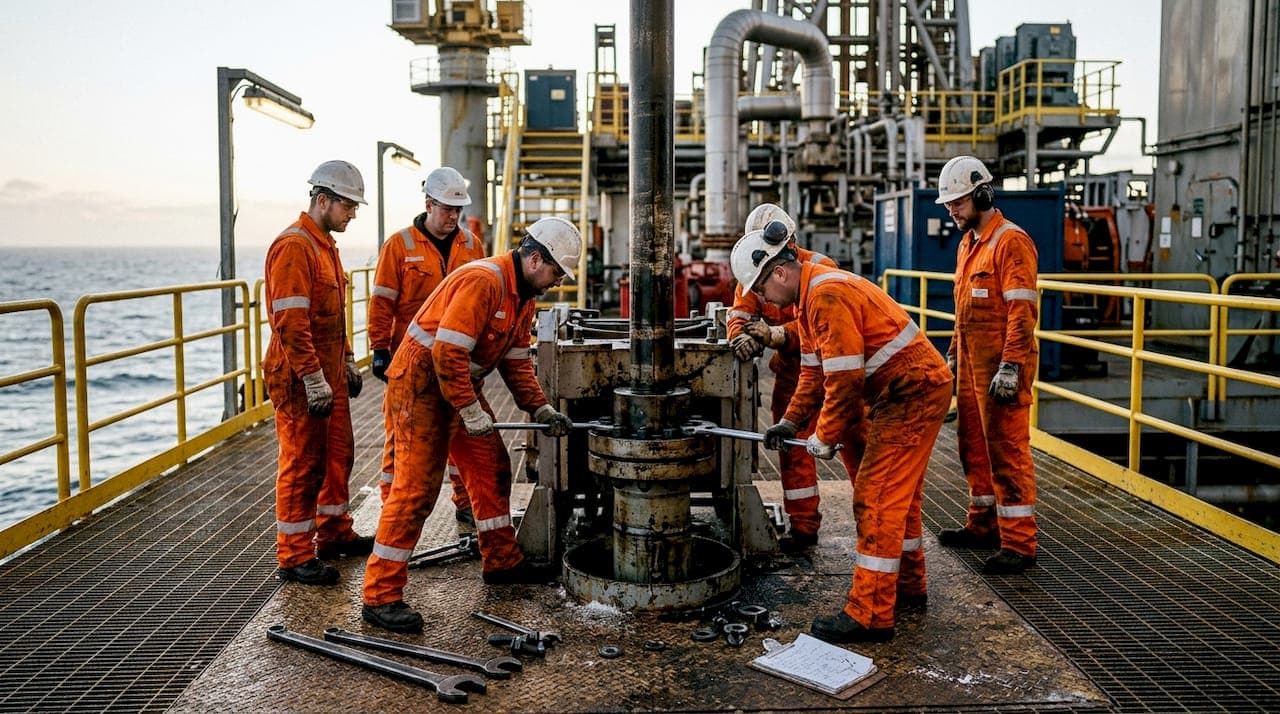
A rig job refers to a position on an offshore oil and gas installation, typically in the North Sea or similar UK waters, where workers support drilling operations, maintain equipment, and ensure the rig runs safely and efficiently. Contrary to popular belief, not every role requires specialist knowledge. Many positions are built for people who are physically capable, safety-conscious, and willing to learn on the job.
The three most common entry-level roles are roustabout, roughneck, and rigger. Understanding what each involves helps you target the right application from the start.
Entry-level rig roles break down as follows:
- Roustabout: General labourer on the rig. Duties include cleaning the deck, handling equipment, painting, and supporting other crew members. This is the most accessible starting point.
- Roughneck: Works directly on the drill floor, handling pipes and supporting the drilling process. Physically demanding and requires close attention to safety protocols.
- Rigger: Assembles and inspects lifting gear, directs crane operations, and ensures loads are moved safely. Requires OPITO Stage 3 and 4 certifications.
Here is a quick comparison of these roles to help you decide which suits your background:
| Role | Experience needed | Key tasks | Certification required |
|---|---|---|---|
| Roustabout | None | Deck work, cleaning, equipment handling | BOSIET, OGUK Medical, MIST |
| Roughneck | Some rig exposure helpful | Pipe handling, drill floor support | BOSIET, OGUK Medical, MIST |
| Rigger | Lifting/rigging background | Crane directing, load securing | OPITO Stage 3/4, BOSIET |
A typical first day as a roustabout involves a safety induction, a tour of the rig, and being assigned to a team for deck duties. You will not be thrown into complex tasks immediately. The environment is structured, team-focused, and safety-led. Every crew member, regardless of seniority, follows the same safety briefings and permit-to-work systems. That consistency is what makes the offshore environment manageable for newcomers.
For a broader overview of available positions, the rig jobs overview on OffstepUK is a useful starting point to understand where you might fit in.
Daily life and physical demands offshore
Knowing your job title is one thing. Understanding what a 28-day rotation actually feels like is another. Life on a rig is structured, repetitive in the best way, and physically demanding. If you go in prepared, it becomes manageable very quickly.
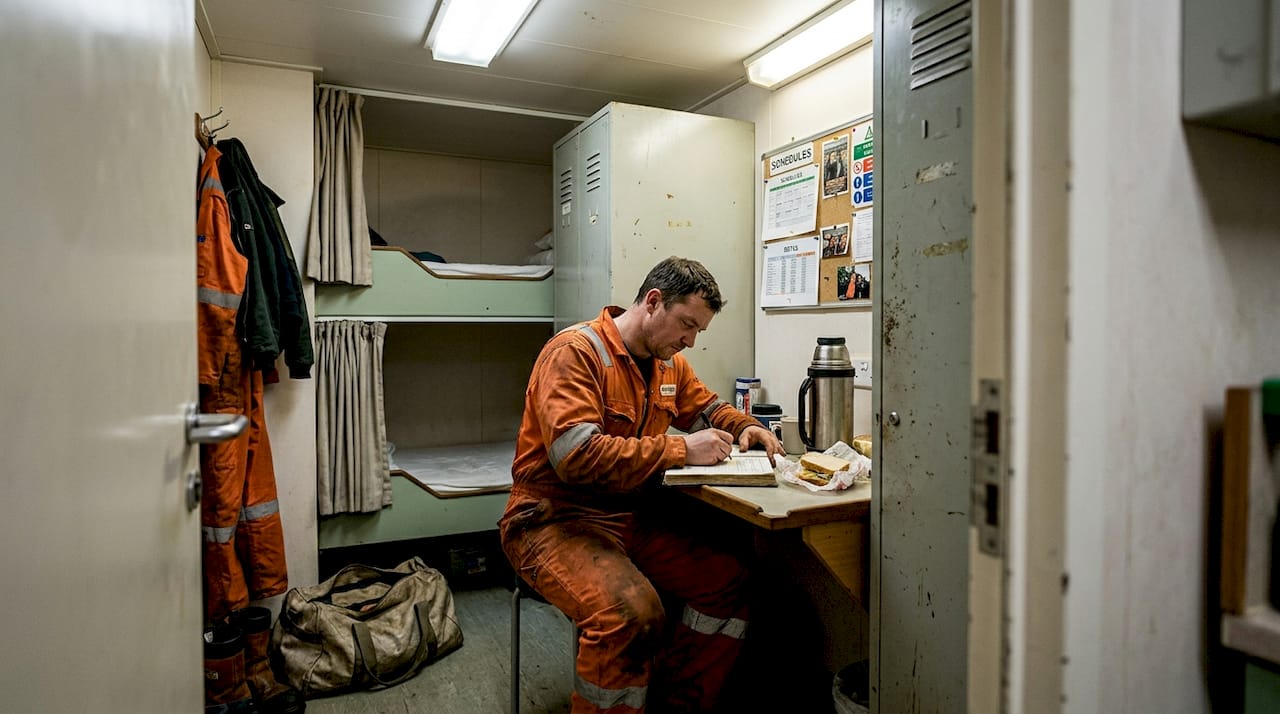
Most offshore workers operate on rotational schedules. Common patterns include 14 days on and 14 days off, 21/21, or 28/28. During your time offshore, you work 12-hour shifts, seven days a week. There are no days off on the rig. When your rotation ends, you return home for an equal period of rest.
Here is a breakdown of typical rotation patterns and what they mean for your lifestyle:
| Rotation | Days on | Days off | Common for |
|---|---|---|---|
| 14/14 | 14 | 14 | Production and maintenance roles |
| 21/21 | 21 | 21 | Drilling and specialist roles |
| 28/28 | 28 | 28 | Some construction and survey roles |
Physically, the work is demanding. Key responsibilities for roustabouts and roughnecks include lifting and moving equipment weighing 25 to 30kg or more, assisting drilling crews, deck cleaning, painting, and following strict safety procedures throughout every task. This is not desk work. Your body needs to be ready.
A numbered breakdown of what a typical roustabout shift looks like:
- Morning safety briefing and permit-to-work review
- Deck inspection and cleaning
- Equipment movement and storage tasks
- Afternoon support for drilling crew operations
- End-of-shift handover and safety sign-off
Living arrangements offshore are straightforward. Accommodation, meals, and laundry are all provided at no cost. You share a cabin, eat in a communal canteen, and spend downtime in recreation rooms. It is not luxury, but it is comfortable and free, which means your salary goes almost entirely into your pocket during rotations.
Pro Tip: Start building physical stamina at least eight weeks before your first application. Focus on grip strength, core fitness, and cardiovascular endurance. Employers notice candidates who clearly meet the physical demands from day one.
Certifications and safety requirements: What you need
You cannot step foot on a UK offshore installation without the right paperwork. This is non-negotiable. The good news is that these certifications are achievable for most people, and many are transferable across different offshore roles and regions.
Here are the core certifications you will need:
- BOSIET (Basic Offshore Safety Induction and Emergency Training): This is the foundational safety course for anyone working offshore. It covers helicopter underwater escape, firefighting, sea survival, and first aid. BOSIET certification is OPITO-approved and valid for four years, after which you complete a FOET (Further Offshore Emergency Training) refresher.
- FOET: The renewal course for BOSIET, taken every four years. Shorter in duration but covers the same core safety areas.
- OGUK Medical: A fitness-to-work medical examination carried out by an approved physician. It assesses your cardiovascular health, vision, hearing, and general physical condition.
- MIST (Minimum Industry Safety Training): An online course covering safety management systems, permit-to-work procedures, and emergency response basics. Usually completed before BOSIET.
- H2S Awareness: A short course on the dangers of hydrogen sulphide gas, which is present on many oil and gas installations. Essential for all offshore workers.
For riggers, OPITO Stage 3 and 4 certifications are also mandatory, covering banksman/slinger duties and rigger competency.
One important nuance: if you are a non-swimmer, you can still complete BOSIET through a water confidence pathway. You will work with instructors in a controlled pool environment. It takes longer, but it is absolutely achievable.
Pro Tip: Many of these certifications are recognised across multiple offshore sectors, including renewables and marine. Investing in them now opens doors well beyond oil and gas.
Cost awareness: BOSIET typically costs between £700 and £1,200 depending on the training centre. MIST is usually under £50 and completed online. Some employers and recruitment agencies will fund certifications for strong candidates, so always ask before paying out of pocket.
Routes into rig jobs and career progression
Once you have your certifications, the question becomes: how do you actually get hired? There are several realistic routes, and the right one depends on your background and how quickly you want to move.
Entry-level requirements are straightforward: you must be 18 or older, physically fit, and hold a high school equivalent qualification. No prior offshore experience is needed for a roustabout role, though any mechanical, industrial, or construction background gives you a clear advantage.
Here are the main routes into the industry:
- Direct application to operators: Companies like BP, Shell, and TotalEnergies occasionally recruit entry-level crew directly, though competition is high.
- Offshore recruitment agencies: Agencies specialising in oil and gas are often the fastest route. They have existing relationships with operators and service companies.
- Service companies: Firms like Halliburton and Schlumberger hire support staff and are often more accessible for newcomers than major operators.
- Land rigs: Starting on a land-based rig in the UK or internationally is a recognised stepping stone to offshore work. It builds your experience record quickly.
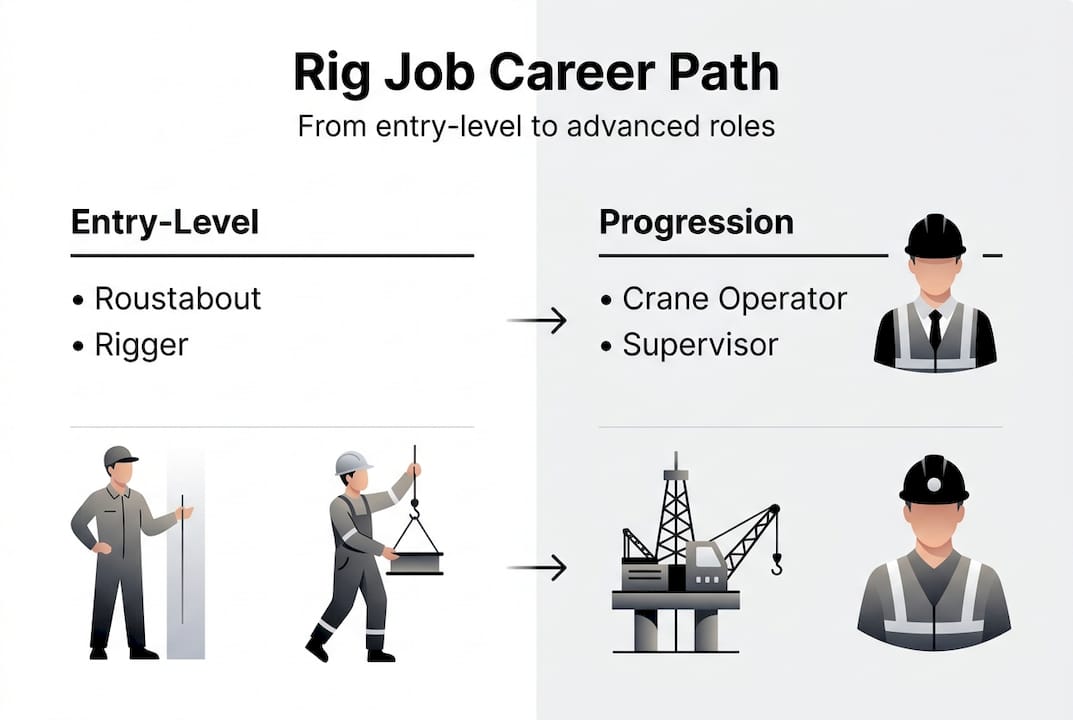
Once you are in, progression follows a clear path. Career advancement typically moves from roustabout or roughneck to derrickman, then driller, toolpusher, and eventually rig manager. Each step requires additional certifications, particularly IWCF Well Control, which is the industry standard for drilling supervisors.
"The offshore career ladder is one of the few in any industry where a person with no degree can reach senior management within a decade, purely through demonstrated competence and the right certifications."
Earning potential reflects this progression:
- Roustabout/Roughneck: £30,000 to £50,000 per year
- Derrickman: £45,000 to £65,000
- Driller: £60,000 to £100,000+
- Toolpusher/Rig manager: £90,000 to £150,000+
Those figures, combined with free accommodation and meals during rotations, make offshore work genuinely lucrative even at entry level.
What most guides miss about starting a rig career
Most articles about rig jobs focus on certifications and job titles. What they rarely address is mindset. The candidates who progress fastest are not always the most technically skilled. They are the ones who show up on time, follow safety procedures without being reminded, and build relationships with experienced crew from day one.
Service companies are consistently underrated as an entry point. Working for a drilling services provider gives you exposure to multiple rigs and operators, which builds your network far faster than starting with a single employer.
There is also a split in the advice you will find online. Some sources suggest that certifications alone are enough to get hired, while others recommend starting onshore first. The reality is that both paths work, and the best choice depends on your personal circumstances and risk tolerance.
One thing that is becoming newly important: digital literacy. Rigs are increasingly using digital permit-to-work systems, electronic maintenance logs, and data-driven safety platforms. Candidates who are comfortable with basic digital tools are standing out in 2026 in ways they simply did not five years ago. That is worth noting before you apply.
Start your offshore journey with the right support
Understanding what a rig job involves is a strong first step, but knowing where to go next makes all the difference between planning and actually getting hired.
OffstepUK is built specifically for people in your position. Whether you are figuring out which certifications to prioritise, need help with your CV, or want to understand which roles suit your background, the platform brings together practical guidance and industry-specific support in one place. The OffstepUK job resources section covers entry-level listings, certification pathways, and career planning tools tailored to the UK offshore sector. If you are serious about making this transition, starting with a free strategy call could save you months of guesswork.
Frequently asked questions
Can I get a rig job with no previous offshore experience?
Yes. Entry-level roustabout roles require no prior offshore experience, provided you hold the necessary certifications and meet the physical fitness standards set by the operator.
Which certificates do I need for a UK offshore rig job?
You must hold BOSIET or FOET, an OGUK medical certificate, MIST, and H2S Awareness as a minimum. Riggers additionally require OPITO Rigger and Banksman/Slinger accreditations.
How much can I earn in an entry-level offshore rig job?
Starting salaries range from £30,000 to £50,000 per year, with free accommodation and meals during rotations. Earnings increase significantly with experience and additional certifications.
Are there offshore jobs for non-swimmers or people with no trade background?
Non-swimmers can complete BOSIET through a water confidence pathway, and those without a trade background can apply for roustabout roles or explore opportunities via service companies and land rigs.